Today's
EarthStation1.com 15% (Or More!) Off Commemorative Memorial Title:
The American Adventure: TV History Series 1607-1876 DVD MP4 USB
Drive
Today, July 4, 2026
July 4: The Fourth Of July (Independence
Day): -- A national American holiday where its people come
together to celebrate the nation's birthday and Independence Day.
On this day, most Americans enjoy grills in their backyards, at
beaches, or in parks. Some partake in parades or marches and enjoy
the fireworks that are often launched at dusk. Although most of us
already had this history lesson in school, we probably weren't
really paying attention as the clock ticked closer to recess or
the end of the day. But we can't fully appreciate our freedoms if
we don't know how we got them - and, more importantly, how close
we came to losing them. The story of America's independence is
truly fascinating with more historical twists and turns than we
can possibly get into here. But at least we can get you started
with the basics. In the 1700s, America wasn't really a nation of
'united states.' Instead, there were 13 colonies with distinct
personalities. From 1763 to 1773, Britain's King George III
increasingly placed pressure on the colonies as he and the British
Parliament enacted a succession of draconian taxes and laws on
them. Excessive taxes on British luxury goods like tea and sugar
were designed to benefit the British crown without any regard for
the hardships of the colonists. By 1764, the phrase "Taxation
without representation is tyranny" spread throughout the
colonies as the rallying cry of outrage. The more the colonists
rebelled, the more King George doubled down with force. Imagine if
enemy soldiers not only had the right to enter your home but the
soldiers could demand that you feed and house them. The Quartering
Act of 1765 allowed British soldiers to do just that. But the
Stamp Act of 1765 became the straw that broke the colonists'
backs. Passed by Parliament in March, this act taxed any piece of
printed paper, including newspapers, legal documents, ships'
papers - and even playing cards! As the colonial grumbling got
louder and bolder, in the fall of 1768, British ships arrived in
Boston Harbor as a show of force. Remember, the British Navy
dominated the seas all over the world due to the far-reaching
presence of the British Empire. Tensions boiled over on March 5,
1770, in Boston Harbor during a street fight between a group of
colonists and British soldiers. The soldiers fired shots that
killed 47-year-old Crispus Attucks, the first American and Black
man to die along with three other colonists in the Boston
Massacre. In 1773, the Boston Tea Party (from which today's Tea
Party Republicans get their name) erupted when colonists disguised
as Mohican Indians raided a British ship, dumping all the tea
overboard to avoid paying the taxes. Continued pressure led to
resistance and the start of the Revolutionary War in the towns of
Lexington and Concord when a militia of patriots battled British
soldiers on April 19, 1775. Conditions were ripe for American
independence. When the first battles in the Revolutionary War
broke out in April 1775, only a handful of colonists wished for
total independence from Great Britain, and those who did were
considered extremists. However, halfway through the following
year, many more colonists had come to lean more toward
independence, as a result of growing hostility towards Britain and
the spread of revolutionary views like those conveyed in the
bestselling pamphlet published in early 1776 by Thomas Paine -
"Common Sense." On June 7, 1776, the Continental
Congress met at the Pennsylvania State House (later Independence
Hall) in Philadelphia and Richard Henry Lee, the Virginia
delegate, introduced a motion calling for the independence of the
colonies. Amid heated debate, Congress rescheduled the vote on
Lee's resolution but appointed a five-man committee - including
Thomas Jefferson of Virginia, John Adams of Massachusetts, Roger
Sherman of Connecticut, Benjamin Franklin of Pennsylvania, and
Robert R. Livingston of New York - to draft a formal statement
justifying the defect from Great Britain. On July 2, 1776, in a
virtually unanimous vote, the Continental Congress voted in favor
of Lee's resolution for independence, and on July 4th, it formally
adopted the Declaration of Independence, which had been written
largely by Jefferson. Ultimately, the drafting of the Declaration
of Independence was a contentious process. After much debate over
what to include and what to leave out, Thomas Jefferson, tasked
with pulling the document together, envisioned a nation where
"Life, Liberty and the pursuit of happiness"
crystallized the very meaning of being an American. The document
proclaimed the 13 American colonies' liberation from Britain and
reaffirmed their rights as free men - declaring that they were no
longer subject (and subordinate) to the monarch of Britain, King
George III, and were now united, free, and independent states.
John Adams wrote to his wife Abigail that July 2 "will be
celebrated, by succeeding Generations, as the great anniversary
Festival" and that the celebration should include "Pomp
and Parade_Games, Sports, Guns, Bells, Bonfires and Illuminations
from one End of this Continent to the other." By an
extraordinary coincidence, Thomas Jefferson and John Adams, the
only two signatories of the Declaration of Independence later to
serve as presidents of the United States, both died on the same
day: July 4, 1826, which was the 50th anniversary of the
Declaration. Although not a signatory of the Declaration of
Independence, James Monroe, another Founding Father who was
elected as president, also died on July 4, 1831, making him the
third President who died on the anniversary of independence. The
only U.S. president to have been born on Independence Day was
Calvin Coolidge, who was born on July 4, 1872. On Sale Until
Midnight Tonight PT!
https://store.earthstation1.com/the-american-adventure-series-us-1st-century-4-dv14.html
Today's
EarthStation1.com 15% (Or More!) Off Commemorative Memorial Title:
The Twentieth Century With Walter Cronkite TV Series DVD MP4 USB
Drive
Today, July 4, 2026
July 4: Philippine Independence Day
(Philippine Republic Day, Filipino-American Friendship Day): -- A
day where filipinos mark their historical alliance with the United
States. It commemorates two important events in Filipino-American
history: 1) July 4, 1901: William Howard Taft became the American
governor of the Philippines; 2) July 4, 1903: The
Philippine-American War is officially concluded with the signing
of The Treaty Of Manila Of 1946 (The Treaty Of General Relations
And Protocol), and 3) July 4, 1946: After 381 years of
near-continuous colonial rule by various powers, the Philippines
attains full independence from the United States. The relationship
between the two countries started as a hostile one and then, with
the intervention of another force, to a friendly one. Filipinos
believe the good they enjoyed from America outweighs the bad they
suffered from them. They decided to celebrate their friendship
with the country. Did you know that America greatly assisted the
Philippines to fight the invading Japanese forces during WWII?
Well, now you know why their friendship is worth celebrating. The
celebration of Filipino-American Friendship Day follows more than
100 years of shared history between the two nations. The beginning
of a good relationship between the two countries could be said to
have started in 1946 when the Philippines gained their complete
independence from the U.S. To show appreciation for the assistance
offered to them when Japan attacked, the Philippines' government
designated July 4 as Independence Day. It is also
Filipino-American Friendship Day. The country had previously
obtained independence from Spain years back. Subsequently, the
Independence Day celebration was moved to July 12 by President
Diosdado Macapagal, and Philippines Republic Day was arranged to
be the new July 4 holiday. Rightly, Republic Day is another name
for Filipino-American Friendship Day. And so, we can say that the
celebration of the day unofficially began at that time. With a
charge toward solidifying the relationship between Filipinos and
Americans, President Ramon Magsaysay issued a proclamation,
establishing the celebration of Philippine American Day in 1955.
And in 1984, under the rule of President Ferdinand Marcos, July 4
was designated as a non-working holiday to celebrate
Filipino-American Friendship Day. For this, we can say that the
first official celebration of Filipino-American Friendship Day
under the name it is known began in 1984. The overthrow of
President Marcos led to the ascension of the Philippines' first
female president, President Corazon C. Aquino in 1987. The
non-working holiday status of the day was abolished. A list of
special and regular holidays was released under the Administrative
Code of 1987 and did not include July 4. Notwithstanding, the
relationship between the Philippines and the U.S. remains good.
For example, basketball was introduced into the country during its
American occupation and today the country boasts of having Asia's
first basketball league, which is also the second oldest in the
world after the American N.B.A. On Sale Until Midnight Tonight PT!
https://store.earthstation1.com/the-twentieth-century-with-walter-cronkite-5-dual-layer-dvd5.html
Today's
EarthStation1.com 15% (Or More!) Off Commemorative Memorial Title:
The Uncle Dave Macon Program DVD, MP4 Video Download, USB Flash
Drive
Today, July 4, 2026
July 4: National Hillbilly Day: -- A day
that recognizes hillbilly culture and celebrates the traditions
and lifestyles of those that reside in rural areas of the Southern
United States. Hillbillies have a reputation for living a very
different life than those who live in urban and suburban areas.
The term 'hillbilly' was often used to refer to the community who
lived in the Appalachian Mountains of Kentucky and West Virginia.
The history of the hillbillies is a long and colorful one.
Hillbillies are often described as simple country folk who live in
rural, remote areas of the south and are often out of touch with
modern society. Hillbillies are also known for their love of
moonshine, a homemade liquor so named because it was originally
illegal and the only way to avoid getting caught was to make it at
nighttime. The stereotypical Hillbilly also has a kinship with
nature and animals. National Hillbilly Day is celebrated on July
4th and was conceptualized by the Ozark Mountain Jubilee, a radio
program that helped popularize the term hillbilly in the 1930s.
The show was later turned into a television program that ran from
1955 on A.B.C. In 1971, National Hillbilly Day was initiated at a
festival in Bentonville, Arkansas, to raise money for the city's
first library. These days when you think of hillbillies, you
probably imagine a different kind of person because the common
perception of them includes drug use, domestic abuse, and
resentment for outsiders. In reality, however, most 'hillbillies'
are a kind, compassionate people. National Hillbilly Day offers a
chance for people to honor the spirit, heritage, and culture of
Appalachia and its people. It's a time to show appreciation for
bluegrass music, pigskin workmanship, and catfish catching prowess
that is part of their rich tradition. On Sale Until Midnight
Tonight PT!
https://store.earthstation1.com/the-uncle-dave-macon-program-dvd.html
Today's
EarthStation1.com 15% (Or More!) Off Commemorative Memorial Title:
Disguises Of War The History Of Camouflage & Stealth DVD MP4
USB Drive
Today, July 4, 2026
July 4: Invisible Day: -- On some days
don't you feel like disappearing? There are days when we feel left
out or invisible, while there are also days we want to feel that
way. Invisible Day makes us wonder what we would do if we were
invisible - would you eavesdrop on other people's conversations or
make your way around town without being seen by anyone? Would you
use your power of invisibility for the greater good or will you be
selfish about it? Invisible Day presents us with so many
interesting possibilities! Who knows how Invisible Day came to be?
Whatever be the reason and whoever is the brain behind it,
probably wanted us to focus on those days when we feel tired or
defeated. On some days we simply don't feel our best, and all we
desire is to leave everything behind and simply vanish into thin
air. But if you want to disappear on Invisible Day, you can do so
by taking leave from work and spending the day doing what pleases
you. You can also go away on a short holiday and disconnect from
the world for a while. Invisible Day is also an acknowledgment of
mental health issues. The celebrations understand that it's okay
to feel down every once in a while In a world where we are
constantly connected to work and family, hyperconnectivity also
makes us feel lonely. People also feel anxious when they are
required to constantly be in touch with others. Invisible Day is
an encouragement to take time off your schedule and have some
alone time. When we hear 'invisible,' we know that humans cannot
actually become invisible. However, the closest experience of
invisibility that we can have is with invisible ink. Invisible
ink, also known as security ink or sympathetic ink, when used for
writing does not let the text appear on paper. It can later be
made visible by some other means. On Sale Until Midnight Tonight
PT!
https://store.earthstation1.com/disguises-of-war-the-history-of-camouflage-amp-stealth-dvd-mp4-usb-driv4.html
Today's
EarthStation1.com 15% (Or More!) Off Commemorative Memorial Title:
Lux Radio Theatre w/ Cecil B. DeMille MP3 Set DVD, Download, USB
Drive
Today, July 4, 2026
July 4: Alice In Wonderland Day: -- July
4, 1862: Lewis Carroll tells Alice Liddell a story that would grow
into Alice's Adventures In Wonderland and its sequels. Alice's
Adventures In Wonderland (commonly shortened to Alice In
Wonderland) is an 1865 novel written by English author Lewis
Carroll (the pseudonym of Charles Dodgson). It tells of a young
girl named Alice, who falls through a rabbit hole into a
subterranean fantasy world populated by peculiar, anthropomorphic
creatures. It is considered to be one of the best examples of the
literary nonsense genre. The tale plays with logic, giving the
story lasting popularity with adults as well as with children. One
of the best-known and most popular works of English-language
fiction, its narrative, structure, characters, and imagery have
been enormously influential in popular culture and literature,
especially in the fantasy genre. The work has never been out of
print, and it has been translated into at least 97 languages. Its
ongoing legacy encompasses many adaptations for stage, screen,
radio, art, theme parks, board games, and video games. Carroll
published a sequel in 1871, entitled Through the Looking-Glass,
and a version for young children, The Nursery "Alice",
in 1890. On Sale Until Midnight Tonight PT!
https://store.earthstation1.com/complete-lux-radio-theatre-2-dual-layer-mp3-dvds-cecil-b-demil23.html
Today's
EarthStation1.com 15% (Or More!) Off Commemorative Memorial Title:
West Point Union And Confederate Classmates MP4 Video Download Or
DVD
Today, July 4, 2026
July 4: West Point Opening Day: -- July
4, 1802: Military Acadamies (Service Acadamies): Military
Acadamies Of The United States: (Service Acadamies Of The United
States): The United States Military Academy (USMA) (West Point):
-- The United States Military Academy (USMA), commonly known as
West Point, a United States service academy that educates cadets
for service as commissioned officers in the United States Army,
opens at West Point, New York. It is the oldest of the five
American service academies (The United States Military Academy
(USMA) in West Point, New York, founded in 1802; The United States
Naval Academy (USNA) adjacent to Annapolis, Maryland,] founded in
1845; The United States Coast Guard Academy (USCGA) in New London,
Connecticut, founded in 1876; The United States Merchant Marine
Academy (USMMA) in Kings Point, New York, founded in 1943; and The
United States Air Force Academy (USAFA) near Colorado Springs,
Colorado, founded in 1954). The Army has occupied the site since
establishing a fort there in 1780 during the American
Revolutionary War, as it sits on strategic high ground overlooking
the Hudson River 50 miles (80 km) north of New York City. West
Point's academic program grants the Bachelor of Science degree
with a curriculum that grades cadets' performance upon a broad
academic program, military leadership performance, and mandatory
participation in competitive athletics. Candidates for admission
must apply directly to the academy and receive a nomination,
usually from a member of Congress. Students are
officers-in-training with the rank of cadet. Collectively, the
students at the academy are the "United States Corps of
Cadets" (USCC). The Army fully funds tuition for cadets in
exchange for an active duty service obligation upon graduation.
About 1,300 cadets enter the academy each July, with about 1,000
cadets graduating. The academy began admitting female cadets in
1976, and women now make up around 20% of entrants. The academy's
traditions have influenced other institutions because of its age
and unique mission. It was the first American college to have an
accredited civil engineering program, and its technical curriculum
became a model for engineering schools. It was also the first
college to have class rings. West Point fields 15 men's and nine
women's National Collegiate Athletic Association (NCAA) sports
teams. Cadets compete in one sport every fall, winter, and spring
season at the intramural, club, or intercollegiate level. Its
football team was a national power in the early and mid-20th
century, winning three national championships. Its alumni are
collectively referred to as "The Long Gray Line," which
include U.S. presidents Dwight D. Eisenhower and Ulysses S. Grant;
Confederate president Jefferson Davis; Confederate generals Robert
E. Lee and Stonewall Jackson; American poet Edgar Allan Poe; U.S.
generals William Tecumseh Sherman, John J. Pershing, Douglas
MacArthur, Omar Bradley, and George Patton; presidents of Costa
Rica, Nicaragua, and the Philippines; and 76 Medal of Honor
recipients. West Point was first occupied on January 27, 1778 by
The Continental Army, and it remains the oldest continuously
operating Army post in the United States Of America. The
Mexican-American War brought the academy to prominence as its
graduates proved themselves in battle for the first time; in all,
452 of 523 graduates who served in the war received battlefield
promotions or awards for bravery. Future Civil War commanders
Ulysses S. Grant and Robert E. Lee, who also later became the
superintendent of the academy, first distinguished themselves in
battle in Mexico. The school experienced a rapid modernization
during the 1850s, often romanticized by the graduates who led both
sides of the Civil War as the "end of the Old West Point
era." New barracks brought better heat and gas lighting,
while new ordnance and tactics training incorporated new rifle and
musket technology and accommodated transportation advances created
by the steam engine. With the outbreak of the Civil War, West
Point graduates filled the general officer ranks of the rapidly
expanding Union and Confederate armies. Many of these West Point
graduate officers had friends on opposing sides of the war,
friendships that were maintained during the war and continued
afterwards. Examples of this include the Union army's lighting
bonfires and sending across battle lines a silver tea service in
celebration of the birth of Confederate General George Pickett's
son George Edward Pickett Jr (1864-1911); Union Captain George
Armstong Custer attended the wedding of West Point classmate and
Confederate Captain John Willis Lea; Union General Ulysses S.
Grant refused to proffer unconditional surrender terms to
Confederate General Robert E. Lee, the latter stating beforehand
to his officers that he knew General Grant would give the South
the honorable peace terms it deserved, and for the rest of his
life, Robert E. Lee "would not tolerate an unkind word about
Grant in his presence"; after the Confederate surrender at
Appomattox Court House, both Union and Confederate West Point
Graduate officers exchanged hand shakes and back slaps, with Grant
cheerfully slapping the back of Confederate General James
Longstreet, best friends at West Point, inviting him to play the
card game of Brags like they used to at the academy; and numerous
other examples which this documentary recounts. In all, 294
graduates served as general officers for the Union, and 151 served
as general officers for the Confederacy. Of all living graduates
at the time of the war, 105 (10%) were killed, and another 151
(15%) were wounded. Nearly every general officer of note from
either army during the Civil War was a graduate of West Point, and
a West Point graduate commanded the forces of one or both sides in
every one of the 60 major battles of the war. Immediately
following the Civil War, the academy enjoyed unprecedented fame as
a result of the role its graduates had played. On Sale Until
Midnight Tonight PT!
https://store.earthstation1.com/west-point-union-and-confederate-classmates-mp4-video-download-or-dvd.html
Today's
EarthStation1.com 15% (Or More!) Off Commemorative Memorial Title:
World War II Propaganda Cartoons MP4 Video Download 2 DVD Set
Today, July 4, 2026
( #JCKaelin here: The following is from
my "Orphan Ann ('Tokyo Rose') Sound And Pictures Page
https://www.earthstation1.com/Tokyo_Rose.html , founded in 1997 as
one of the earliest web pages on the world wide web, which has
served ever since as a clearing house and academic source for
information regarding Iva Toguri (which is what she called
herself). Iva and I became good friends in her later life, a
privilege she allowed fewer people than "can barely be
accounted for on two hands", to quote this page. You'll
understand why as you read on. We had many long conversations (one
9 1/2 hours long while she was in the Masonic Hospital in Chicago
when she was treated for sciatica), and she went out of her way to
tell me at the conclusion virtually all of those conversations "I
love you", something that is extraordinarily rare for a
Japanese of either American or Japanese national origin to do, let
alone of her generation. I owe her a great debt of thanks, as it
was in large part her faith in me that I took the courage of my
convictions, volunteered off of disability after recovering from
crippling case of Chronic Fatigue Syndrome that disabled me for a
decade, and encouraged me to make the operation of
EarthStation1.com my chosen profession. I miss her every day, I
pray for her guidance virtually daily, and her picture has hung
directly in front of my office desk all these years :) .)
============= July 4, 1916: #BOTD: #HBD! Iva Toguri, married name
Iva Toguri D'Aquino, American disc jockey, radio personality,
saboteur and Americna patriot who was a host on the
English-language radio broadcasts transmitted by Radio Tokyo to
Allied troops in the South Pacific during World War II on the Zero
Hour radio show (d. September 26, 2006) is #born Iva Ikuko Toguri
in Los Angeles, the daughter of Japanese immigrants Jun and Fumi
Toguri. Iva was a Girl Scout, and was raised a Christian.
============= "Orphan Ann" ("Tokyo Rose") By
J.C. Kaelin 1997, 2018 She was probably the most listened-to disc
jockey in history, yet hardly anyone remembers her as such today,
in spite of, or perhaps because of, the lingering infamous legend
surrounding her. Brought up by her immigrant Methodist parents to
think of herself as an American, Iva Ikuko Toguri (1916 - 2006), a
first generation Japanese-American ("Nisei") was forced
to broadcast propaganda for Japan during World War II, after her
native U.S. abandoned her there mere days before the Pearl Harbor
attack, and despite her continual efforts throughout the war to
return home. Chosen out of the NHK/Radio Tokyo typing pool to be a
disc jockey by the very Allied POW's being beaten and starved into
writing her shows, she became an adept at sabotage of her own
broadcasts, trained to read and eventually write her segments of
"The Zero Hour" the way the POW saboteurs intended,
while helping to keep these soldiers alive at mortal personal risk
with food, medicine, clothing and hope during her almost daily
visits to their cells. Though employed to broadcast pro-japanese
propaganda, her outspoken support of the Allies off-mike (while
cleverly concealing it within her message and delivery on-air)
resulted in numerous arguments and even fist fights at work, and
continual harrasment at home and elsewhere. She literally cheered
in the streets as U.S. Gen. Doolittle's Raiders flew over Tokyo,
and cheered yet again when the first American B-29's appeared over
Tokyo in the fall of '44 (the first one was a BR-29 reconnaissance
craft named "Tokyo Rose"). When she decided that NHK and
the Japanese Army were interfering too much with the show, she
started not showing up for work, spending months incommunicado
without permission, at one point taking a month's retreat at a
Church college to receive religious instruction to convert to
Roman Catholicism. She was the only Japanese of Allied national
citizenship involved with broadcasting WWII Japanese propaganda to
refuse to give up their citizenship, even in the face of the
twice-weekly and sometimes daily 3 AM harrassments she endured at
the hands of the Kempeitai Thought Police. Yet in spite of, and
ironically because of this, she was to be only person ever tried
or sent to prison for these broadcasts, based wholly upon evidence
that U.S. authorites had fabricated and threatened two NHK workers
who had given up their American citizenship, George Mitsushio and
Ken Oki, into perjuring themselves with. In a trial she was
subjected to precisely because she had kept her precious
citizenship intact, she was to see it revoked in the end as part
of her punishment. Hers was the most expensive trial in American
history up until that time, and probably the most garishly
trumped-up of all its show trials, though these facts have been
largely forgotten. All this in order that she might have foisted
upon her for popular and political purposes the title of "Tokyo
Rose", even though neither she nor anyone else had ever
broadcast for the Japanese under that name, and had in fact never
even been in front of a radio microphone till fall of 1943, years
after the myth of a single "Tokyo Rose" arose from the
imaginations of Allied soldiers in the Pacific who tried to put a
face on the many female voices coming from numerous Japanese
controlled radio stations. Though long since pardoned by President
Ford, himself a veteran of the Pacific War and survivor of many
kamikaze attacks, controversy over her supposed guilt continues
even to this day. Of her own broadcasts, during which she actually
used the name "Orphan Ann", all that remains are a
smattering of scripts, and a precious few recordings that can
barely be accounted for on two hands. This webpage is part of an
ongoing project to bring the sights, the sounds and the facts
about Ms. Toguri to the World Wide Web so that the world public
can see, hear and read for themselves the truth about this
extraordinary women, and the tragic injustices that have been and
continue to be perpetrated against her. On Sale Until Midnight
Tonight PT!
https://store.earthstation1.com/world-war-ii-propaganda-cartoons-dvd-dual-layer-all-regions.html
Today's
EarthStation1.com 15% (Or More!) Off Commemorative Memorial Title:
American Revolutionary War Documentaries DVD, Download, USB Drive
Today, July 4, 2026
July 4, 1776: The Age Of Enlightenment
(The Enlightenment, The Age Of Reason): The Age Of Revolution: The
Atlantic Revolutions: The American Enlightenment: The American
Revolution: The Declaration Of Independence (The Unanimous
Declaration Of The Thirteen United States of America): -- The
Declaration Of Independence, the founding document of the United
States in both the engrossed version and the original printing, is
unanimously approved by the 56 delegates to The Second Continental
Congress, who convened at the Pennsylvania State House, later
renamed Independence Hall, in the colonial era capital of
Philadelphia. The Declaration explains to the world why the
Thirteen Colonies regarded themselves as independent sovereign
states no longer subject to British colonial rule. The 56
delegates who signed the Declaration Of Independence came to be
known as the nation's Founding Fathers, and the Declaration has
become one of the most circulated, reprinted, and influential
documents in world history. The Second Continental Congress
charged the Committee of Five, including John Adams, Benjamin
Franklin, Thomas Jefferson, Robert R. Livingston, and Roger
Sherman, with authoring the Declaration. Adams, a leading
proponent of independence, persuaded the Committee of Five to
charge Jefferson with writing the document's original draft, which
the Second Continental Congress then edited. Jefferson largely
wrote the Declaration in isolation between June 11 and June 28,
1776, from the second floor of a three-story home he was renting
at 700 Market Street in Philadelphia. The Declaration was a formal
explanation of why the Continental Congress voted to declare
American independence from the Kingdom of Great Britain, over a
year after the American Revolutionary War commenced with the
Battles of Lexington and Concord, in April 1775. Two days prior to
the Declaration's unanimous adoption, the Second Continental
Congress unanimously passed the Lee Resolution, which established
the consensus of the Congress that the British had no governing
authority over the Thirteen Colonies. After unanimously ratifying
the text on July 4, Congress issued the Declaration Of
Independence in several forms. It was published as the printed
Dunlap broadside, which was widely distributed. The Declaration
was first read to the public simultaneously at noon on July 8,
1776, in three exclusively designated locations: Easton,
Pennsylvania; Philadelphia; and Trenton, New Jersey. What
Jefferson called his "original Rough draft", one of
several revisions, is currently preserved at the Library of
Congress in Washington, D.C., complete with changes made by Adams
and Franklin, and Jefferson's notes of changes made by Congress.
The best-known version of the Declaration is the signed copy now
displayed at the National Archives in Washington, D.C., which is
popularly regarded as the official document; this copy, engrossed
by Timothy Matlack, was ordered by Congress on July 19, and signed
primarily on August 2, 1776. The Declaration justified the
independence of the United States by listing 27 colonial
grievances against King George III and by asserting certain
natural and legal rights, including a right of revolution. On
November 19, 1863, following the Battle of Gettysburg, the
bloodiest battle of the American Civil War, Abraham Lincoln made
the Declaration the centerpiece of his Gettysburg Address, a brief
but powerful and enduring 271-word statement dedicating what is
now Gettysburg National Cemetery. The Declaration Of Independence
has proven an influential and globally impactful statement on
human rights, particularly its second sentence: "We hold
these truths to be self-evident, that all men are created equal,
that they are endowed by their Creator with certain unalienable
Rights, that among these are Life, Liberty and the pursuit of
Happiness." Stephen Lucas called the Declaration Of
Independence "one of the best-known sentences in the English
language." Historian Joseph Ellis has written that the
document contains "the most potent and consequential words in
American history". The passage came to represent a moral
standard to which the United States should strive. This view was
notably promoted by Lincoln, who considered the Declaration to be
the foundation of his political philosophy and argued that it is a
statement of principles through which the United States
Constitution should be interpreted. The 56 delegates who signed
the Declaration represented each of the Thirteen Colonies: New
Hampshire, Massachusetts Bay, Rhode Island and Providence
Plantations, Connecticut, New York, New Jersey, Pennsylvania,
Maryland, Delaware, Virginia, North Carolina, South Carolina, and
Georgia. The Declaration Of Independence inspired many similar
documents in other countries, the first being the 1789 Declaration
of United Belgian States issued during the Brabant Revolution in
the Austrian Netherlands. It also served as the primary model for
numerous declarations of independence in Europe, Latin America,
Africa, and Oceania following its adoption. On Sale Until Midnight
Tonight PT!
https://store.earthstation1.com/american-revolutionary-war-dvd-documentaries.html
Today's
EarthStation1.com 15% (Or More!) Off Commemorative Memorial Title:
American Lifestyle Famous Americans TV Series DVD, Download, USB
Drive
Today, July 4, 2026
July 4, 1826: #DOTD: #RIP: Thomas
Jefferson, American author, inventor, lawyer, politician,
architect, one of the finest minds of the 1700s, Founding Father
who was the principal author of the Declaration Of Independence
and later served as the third President of the United States from
1801 to 1809 (b. April 13, 1743) #dies aged 83 at his his
masterpiece plantation mansion of Monticello near Charlottesville,
Virginia. on the same day as John Adams, founding father and
second president of the United States, both dying on the fiftieth
anniversary of the adoption of the United States Declaration Of
Independence which Jefferson wrote and both he and Adams signed.
He is buried in the graveyard of Monticello. Thomas Jefferson was
born at the family's Shadwell Plantation in Goochland (now in
Albemarle County), Virginia Colony. Prior to becoming President,
he was elected the second Vice President of the United States,
serving under John Adams from 1797 to 1801. A proponent of
democracy, republicanism, and individual rights motivating
American colonists to break from Great Britain and form a new
nation, he produced formative documents and decisions at both the
state and national level. He was a land owner and farmer.
Jefferson was primarily of English ancestry, born and educated in
colonial Virginia. He graduated from the College of William and
Mary and briefly practiced law, at times defending slaves seeking
their freedom. During the American Revolution, he represented
Virginia in the Continental Congress that adopted the Declaration,
drafted the law for religious freedom as a Virginia legislator,
and he served as a wartime governor (1779-1781). He became the
United States Minister to France in May 1785, and subsequently the
nation's first Secretary Of State in 1790-1793 under President
George Washington. Jefferson and James Madison organized the
Democratic-Republican Party to oppose the Federalist Party during
the formation of the First Party System. With Madison, he
anonymously wrote the controversial Kentucky and Virginia
Resolutions in 1798-1799, which sought to embolden states' rights
in opposition to the national government by nullifying the Alien
and Sedition Acts. As President, Jefferson pursued the nation's
shipping and trade interests against Barbary pirates and
aggressive British trade policies. He also organized the Louisiana
Purchase, almost doubling the country's territory. As a result of
peace negotiations with France, his administration reduced
military forces. He was reelected in 1804. Jefferson's second term
was beset with difficulties at home, including the trial of former
Vice President Aaron Burr. American foreign trade was diminished
when Jefferson implemented the Embargo Act of 1807, responding to
British threats to U.S. shipping. In 1803, Jefferson began a
controversial process of Indian tribe removal to the newly
organized Louisiana Territory, and he signed the Act Prohibiting
Importation of Slaves in 1807. Jefferson mastered many
disciplines, which ranged from surveying and mathematics to
horticulture and mechanics. He was a proven architect in the
classical tradition. Jefferson's keen interest in religion and
philosophy earned him the presidency of the American Philosophical
Society. He shunned organized religion but was influenced by both
Christianity and deism. He was well versed in linguistics and
spoke several languages. He founded the University of Virginia
after retiring from public office. He was a prolific letter writer
and corresponded with many prominent and important people
throughout his adult life. His only full-length book is Notes on
the State of Virginia (1785), considered the most important
American book published before 1800. Although regarded as a
leading spokesman for democracy and republicanism in the era of
the Enlightenment, Jefferson's historical legacy is mixed. He
owned and profited from several plantations which were worked by
slaves throughout all of his adult life. There is evidence that
after his wife Martha died in 1782, Jefferson fathered children
with Martha's half-sister, and his sister-in-law, Sally Hemings,
who was his slave. Some modern scholarship has been critical of
Jefferson's private life, pointing out the contradiction between
his ownership of slaves and his famous declaration that "all
men are created equal." He continues to rank highly among
U.S. presidents. Presidential scholars and historians generally
praise Jefferson's public achievements, including his primary
authorship of the Declaration Of Independence, advocacy of
religious freedom and tolerance in Virginia, and his oversight of
the Louisiana Purchase. He died on July 4, 1826, the same day as
John Adams, second president of the United States, on the fiftieth
anniversary of the adoption of the United States Declaration Of
Independence. On Sale Until Midnight Tonight PT!
https://store.earthstation1.com/american-lifestyle-famous-americans-tv-series-2-dual-layer-dvd2.html
Today's
EarthStation1.com 15% (Or More!) Off Commemorative Memorial Title:
Portraits Of American Presidents Nos. 1-42 TV Series MP4 Download
DVD
Today, July 4, 2026
July 4, 1826: #DOTD: #RIP: John Adams,
one of the founding fathers of the United States, American
statesman, attorney, diplomat, writer, second president of the
United States from 1797 to 1801 (b. October 30, 1735) #dies aged
aged 90 at his home in Quincy, Massachusetts on the same day as
Thomas Jefferson, founding father and third president of the
United States, both dying on the fiftieth anniversary of the
adoption of the United States Declaration Of Independence which
Jefferson wrote and both he and Adams signed. He is buried in the
cemetery of The United First Parish Church in Quincy. Before his
presidency, he was a leader of the American Revolution that
achieved independence from Great Britain. During the latter part
of the Revolutionary War and in the early years of the new nation,
he served the U.S. government as a senior diplomat in Europe.
Adams was the first person to hold the office of vice president of
the United States, serving from 1789 to 1797. He was a dedicated
diarist and regularly corresponded with important contemporaries,
including his wife and adviser Abigail Adams and his friend and
political rival Thomas Jefferson. A lawyer and political activist
prior to the Revolution, Adams was devoted to the right to counsel
and presumption of innocence. He defied anti-British sentiment and
successfully defended British soldiers against murder charges
arising from the Boston Massacre. Adams was a Massachusetts
delegate to the Continental Congress and became a leader of the
revolution. He assisted Jefferson in drafting the Declaration of
Independence in 1776 and was its primary advocate in Congress. As
a diplomat he helped negotiate a peace treaty with Great Britain
and secured vital governmental loans. Adams was the primary author
of the Massachusetts Constitution in 1780, which influenced the
United States Constitution, as did his essay Thoughts on
Government. Adams was elected to two terms as vice president under
President George Washington and was elected as the United States'
second president in 1796. He was the only president elected under
the banner of the Federalist Party. Adams's term was dominated by
the issue of the French Revolutionary Wars, and his insistence on
American neutrality led to fierce criticism from both the
Jeffersonian Republicans and from some in his own party, led by
his rival Alexander Hamilton. Adams signed the controversial Alien
and Sedition Acts, and built up the Army and Navy in the
undeclared naval war with France. He was the first president to
reside in the White House. In his bid in 1800 for reelection to
the presidency, opposition from Federalists and accusations of
despotism from Jeffersonians led to Adams losing to his vice
president and former friend Jefferson, and he retired to
Massachusetts. He eventually resumed his friendship with Jefferson
by initiating a continuing correspondence. He and Abigail
generated the Adams political family, including their son John
Quincy Adams, the sixth president. John Adams died on July 4, 1826
- the fiftieth anniversary of the adoption of the Declaration of
Independence. Adams and his son are the only presidents of the
first twelve who never owned slaves. Historians and scholars have
favorably ranked his administration. On Sale Until Midnight
Tonight PT!
https://store.earthstation1.com/portraits-of-american-presidents-nos-142-tv-series-mp4-download1424.html
Today's
EarthStation1.com 15% (Or More!) Off Commemorative Memorial Title:
Mr. President US Presidential History Radio w/Edward Arnold CD MP3
USB
Today, July 4, 2026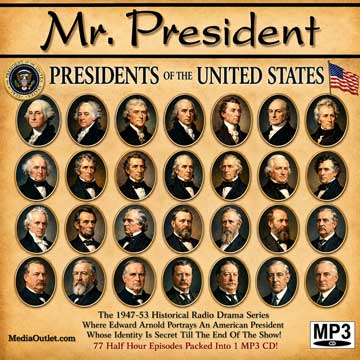
July 4, 1831: #DOTD: #RIP: James Monroe,
one of the founding fathers of the United States, American
soldier, statesman, lawyer, and politician, 5th President of the
United States from 1817 to 1825 (b. April 28, 1758) #dies aged 73
in Lower Manhattan, New York on the anniversary of 1) the
Declaration Of Independence, 2) the death of fellow founding
father Thomas Jefferson, and 3) the death of fellow founding
father John Adams. He is buried at Hollywood Cemetery in Richmond,
Virginia. James Monroewass #born in Westmoreland County, Virginia.
Monroe was the last president of the Virginia dynasty, and his
presidency ushered in what is known as the Era of Good Feelings.
Born in Westmoreland County, Virginia, Monroe was of the planter
class and fought in the American Revolutionary War. He was wounded
in the Battle of Trenton with a musket ball to his shoulder. After
studying law under Thomas Jefferson from 1780 to 1783, he served
as a delegate in the Continental Congress. As an anti-federalist
delegate to the Virginia convention that considered ratification
of the United States Constitution, Monroe opposed ratification,
claiming it gave too much power to the central government. He took
an active part in the new government, and in 1790 he was elected
to the Senate of the first United States Congress, where he joined
the Democratic-Republicans. He gained experience as an executive
as the Governor of Virginia and rose to national prominence as a
diplomat in France, when he helped negotiate the Louisiana
Purchase in 1803. During the War Of 1812, Monroe served in
critical roles as Secretary Of State and the Secretary of War
under President James Madison. Facing little opposition from the
fractured Federalist Party, Monroe was easily elected president in
1816, winning over 80 percent of the electoral vote and becoming
the last president during the First Party System era of American
politics (a model of American politics used in history and
political science to periodize the political party system that
existed in the United States between roughly 1792 and 1824). As
president, he sought to ease partisan tensions, embarking on a
tour of the country that was well received. With the ratification
of the Treaty of 1818, under the successful diplomacy of his
Secretary Of State John Quincy Adams, the United States extended
its reach from the Atlantic to the Pacific, by acquiring harbor
and fishing rights in the Pacific Northwest; the United States and
Britain jointly occupied the Oregon Country. In addition to the
acquisition of Florida, the 1819 Adams-Onis Treaty secured the
westernmost section of the southern border of the United States
along the 42nd Parallel to the Pacific Ocean and represented
America's first determined attempt at creating an "American
global empire". As nationalism surged, partisan acrimony
subsided. This swell of national purpose and political harmony
subsided some when the Panic of 1819 struck and a dispute over the
admission of Missouri embroiled the country in 1820. Nonetheless,
Monroe won near-unanimous reelection. Monroe supported the
founding of colonies in Africa for freed slaves that would
eventually form the nation of Liberia, whose capital, Monrovia, is
named in his honor. In 1823, he announced the United States'
opposition to any European intervention in the recently
independent countries of the Americas with the Monroe Doctrine,
which became a landmark in American foreign policy. His presidency
concluded the first period of American presidential history before
the beginning of Jacksonian democracy and the Second Party System
era. Following his retirement in 1825, Monroe was plagued by
financial difficulties. James Monroe died in New York City on the
anniversary of 1) the Declaration Of Independence, 2) the death of
fellow founding father Thomas Jefferson, and 3) the death of
fellow founding father John Adams. He was buried in Marble
Cemetery in New York City, then moved to The James Monroe Tomb in
Hollywood Cemetery, Richmond, Virginia. The principal feature of
the tomb is an architecturally unusual cast iron cage, designed by
Albert Lybrock and installed in 1859. The tomb was declared a
National Historic Landmark in 1971 for its unique architecture. To
Richmonders it is colloquially known as The Birdcage. He has been
generally ranked as an above-average president. On Sale Until
Midnight Tonight PT!
https://store.earthstation1.com/mister-president-historical-old-time-radio-mp3-c3.html
Today's
EarthStation1.com 15% (Or More!) Off Commemorative Memorial Title:
Marian Anderson Documentary DVD, MP4 Video Download, USB Flash
Drive
Today, July 4, 2026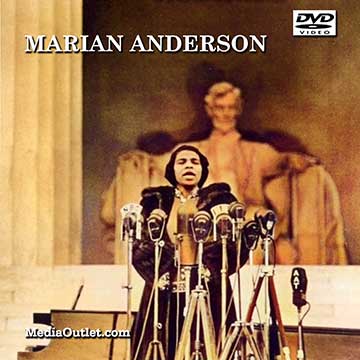
July 4, 1831: Aesthetics: Performing
Arts: Premieres: Musical Premieres: United States Musical
Premieres: National Symbols: National Symbols Of The United
States: Patriotic Songs: American Patriotic Songs: National
Anthems: National Anthems Of The United States: My Country, 'Tis
Of Thee: -- "My Country, 'Tis of Thee", also known as
simply "America" receives its first performance at a
children's Independence Day celebration at Park Street Church in
Boston, while all those involved were unaware that American
Founding Father and 5th President Of The United States James
Monroe had died that same day. One of the de facto national
anthems of the United States (along with songs like "Hail,
Columbia") before the adoption of "The Star-Spangled
Banner" as the official U.S. national anthem in 1931, the
lyrics were written by Andover Theological Seminary student Samuel
Francis Smith earlier that year, and was set to the melody the
national anthem of the United Kingdom, "God Save the King"
by composer Lowell Mason. The use of the same melody as the
British royal anthem is a contrafactum which reworks this symbol
of British monarchy to make a statement about American democracy.
The first publication of "America" was in 1832. An
abolitionist version was written, by A. G. Duncan, 1843, with
lyrics mentioning white and black races. For Washington's
Centennial celebration, another verse was added to the original
version. Marian Anderson performed the song at the Lincoln
Memorial on Easter Sunday, April 9, 1939. Anderson, an African
American singer, had been forbidden to perform at the DAR
Constitution Hall due to its racist whites-only policy. After a
national outcry, and with support from Eleanor Roosevelt, the
concert was held on the steps of the memorial, and attracted a
crowd of more than 75,000 in addition to a national radio audience
of millions. Martin Luther King Jr. recited the first verse of the
song toward the end of his famous "I Have a Dream"
speech at the Lincoln Memorial during the March on Washington for
Jobs and Freedom on August 28, 1963. Crosby, Stills & Nash
performed the song on the first episode of The Tonight Show with
Jay Leno that aired after the September 11 attacks in 2001. On
January 20, 2009, Aretha Franklin sang the song at the first
inauguration of Barack Obama. Kelly Clarkson sang it at his second
inauguration. On Sale Until Midnight Tonight PT!
https://store.earthstation1.com/marian-anderson-dvd-documentary.html
Today's
EarthStation1.com 15% (Or More!) Off Commemorative Memorial Title:
The American Adventure: TV History Series 1607-1876 DVD MP4 USB
Drive
Today, July 4, 2026
July 4, 1817: The Territorial Evolution
Of The United States: The Erie Canal: -- In Rome, New York,
construction on the Erie Canal begins, the historic direct passage
canal in upstate New York that runs east-west from the Hudson
River to Lake Erie. Completed in 1825 and first opened for
waterway traffic on October 26, 1825, the canal was the first
navigable waterway connecting the Atlantic Ocean to the Great
Lakes, vastly reducing the costs of transporting people and goods
across the Appalachians. In effect, the canal accelerated the
settlement of the Great Lakes region, the westward expansion of
the United States, and the economic ascendancy of New York State.
It has been called "The Nation's First Superhighway." A
canal from the Hudson to the Great Lakes was first proposed in the
1780s, but a formal survey was not conducted until 1808. The New
York State Legislature authorized construction in 1817. Political
opponents of the canal, and of its lead supporter New York
Governor DeWitt Clinton, denigrated the project as "Clinton's
Folly" and "Clinton's Big Ditch". Nonetheless, the
canal saw quick success upon opening on October 26, 1825, with
toll revenue covering the state's construction debt within the
first year of operation. The westward connection gave New York
City a strong advantage over all other U.S. ports and brought
major growth to canal cities such as Albany, Utica, Syracuse,
Rochester, and Buffalo. The construction of the Erie Canal was a
landmark civil engineering achievement in the early history of the
United States. When built, the 363-mile (584 km) canal was the
second-longest in the world (after the Grand Canal in China).
Initially 40 feet (12 m) wide and 4 feet (1.2 m) deep, the canal
was expanded several times, most notably from 1905 to 1918 when
the "Barge Canal" was built and over half the original
route was abandoned. The modern Barge Canal measures 351 miles
(565 km) long, 120 feet (37 m) wide, and 12 feet (3.7 m) deep. It
has 34 locks, including the Waterford Flight, the steepest locks
in the United States. When leaving the canal, boats must also
traverse the Black Rock Lock to reach Lake Erie or the Troy
Federal Lock to reach the tidal Hudson. The overall elevation
difference is about 565 feet (172 m). The Erie's peak year was
1855, when 33,000 commercial shipments took place. It continued to
be competitive with railroads until about 1902, when tolls were
abolished. Commercial traffic declined heavily in the latter half
of the 20th century due to competition from trucking and the 1959
opening of the larger St. Lawrence Seaway. The canal's last
regularly-scheduled hauler, the Day Peckinpaugh, ended service in
1994. Today, the Erie Canal is mainly used by recreational
watercraft. It connects the three other canals in the New York
State Canal System: the Champlain, Oswego, and Cayuga-Seneca. Some
long-distance boaters take the Erie as part of the Great Loop. The
canal has also become a tourist attraction in its own right-a
number of parks and museums are dedicated to its history. The Erie
Canalway Trail is a popular cycling path that follows the canal
across the state. In 2000, Congress designated the Erie Canalway
National Heritage Corridor to protect and promote the system. On
Sale Until Midnight Tonight PT!
https://store.earthstation1.com/the-american-adventure-series-us-1st-century-4-dv14.html
Today's
EarthStation1.com 15% (Or More!) Off Commemorative Memorial Title:
The Siege Of Vicksburg American Civil War DVD MP4 Download USB
Drive
Today, July 4, 2026
July 4, 1863- The American Civil War (The
Civil War, The War Between The States): The Western Theater Of The
American Civil War: The Vicksburg Campaign: The Siege Of
Vicksburg: The Fall Of Vicksburg: -- Vicksburg, the last
Confederate stronghold on the Mississippi River, surrendered to
General Grant and the Army of the West after a six week siege.
With the Union in control of the Mississippi, the Confederacy was
effectively split in two, cut off from its western allies. The
Siege Of Vicksburg (May 18 - July 4, 1863) was the final major
military action in the Vicksburg Campaign of the American Civil
War. Vicksburg was the last major Confederate stronghold on the
Mississippi River. The successful ending of the Vicksburg Campaign
significantly degraded the ability of the Confederacy to maintain
its war effort. The Confederate surrender of Vicksburg on July 4,
1863 is sometimes considered, when combined with Gen. Robert E.
Lee's defeat at Gettysburg by Maj. Gen. George Meade, the turning
point of the war. It cut off the states of Arkansas, Louisiana,
and Texas from the rest of the Confederate States, effectively
splitting the Confederacy in two for the duration of the war. The
Union victory also permanently severed communication between the
Trans-Mississippi Department and the balance of the Confederacy.
On Sale Until Midnight Tonight PT!
https://store.earthstation1.com/the-siege-of-vicksburg-american-civil-war-dvd-mp4-download-usb-driv4.html
Today's
EarthStation1.com 15% (Or More!) Off Commemorative Memorial Title:
The Battle Of Gettysburg Civilians DVD MP4 Download USB Flash
Drive
Today, July 4, 2026
July 4, 1863: The American Civil War (The
Civil War, The War Between The States): The Eastern Theater Of The
American Civil War: The Gettysburg Campaign: The Battle Of
Gettysburg: The Retreat From Gettysburg: -- The Army Of Northern
Virginia withdraws from the battlefield after losing the Battle Of
Gettysburg, signalling an end to the Southern invasion of the
North. The Battle Of Gettysburg was fought July 1-3, 1863, in and
around the town of Gettysburg, Pennsylvania, by Union and
Confederate forces during the American Civil War. The battle
involved the largest number of casualties of the entire war and is
often described as the war's turning point. Union Maj. Gen. George
Meade's Army Of The Potomac defeated attacks by Confederate Gen.
Robert E. Lee's Army Of Northern Virginia, halting Lee's invasion
of the North. After his success at Chancellorsville in Virginia in
May 1863, Lee led his army through the Shenandoah Valley to begin
his second invasion of the North-the Gettysburg Campaign. With his
army in high spirits, Lee intended to shift the focus of the
summer campaign from war-ravaged northern Virginia and hoped to
influence Northern politicians to give up their prosecution of the
war by penetrating as far as Harrisburg, Pennsylvania, or even
Philadelphia. Prodded by President Abraham Lincoln, Maj. Gen.
Joseph Hooker moved his army in pursuit, but was relieved of
command just three days before the battle and replaced by Meade.
The day after the two armies collided on at Gettysburg on July 1,
most of both armies had assembled. The Union line was laid out in
a defensive formation resembling a fishhook. In the late afternoon
of July 2, Lee launched a heavy assault on the Union left flank,
and fierce fighting raged at Little Round Top, the Wheatfield,
Devil's Den, and the Peach Orchard. On the Union right,
Confederate demonstrations escalated into full-scale assaults on
Culp's Hill and Cemetery Hill. All across the battlefield, despite
significant losses, the Union defenders held their lines. On the
third day of battle, fighting resumed on Culp's Hill, and cavalry
battles raged to the east and south, but the main event was a
dramatic infantry assault by 12,500 Confederates against the
center of the Union line on Cemetery Ridge, known as Pickett's
Charge. The charge was repulsed by Union rifle and artillery fire,
at great loss to the Confederate army. Lee led his army on a
torturous retreat back to Virginia. Between 46,000 and 51,000
soldiers from both armies were casualties in the three-day battle,
the most costly in US history. On November 19, President Lincoln
used the dedication ceremony for the Gettysburg National Cemetery
to honor the fallen Union soldiers and redefine the purpose of the
war in his historic Gettysburg Address. On Sale Until Midnight
Tonight PT!
https://store.earthstation1.com/the-battle-of-gettysburg-civilians-dvd-mp4-download-usb-flash-driv4.html
Today's
EarthStation1.com 15% (Or More!) Off Commemorative Memorial Title:
Long Shadows: Civil War Legacy DVD, Video Download, USB Flash
Drive
Today, July 4, 2026
July 4, 1913: The American Civil War (The
Civil War, The War Between The States): The Eastern Theater Of The
American Civil War: The Gettysburg Campaign: The Battle Of
Gettysburg: The Great Reunion (The Great Reunion Of 1913, The 1913
Gettysburg Reunion): -- President Woodrow Wilson addresses
American Civil War veterans at the Great Reunion Of 1913. On Sale
Until Midnight Tonight PT!
https://store.earthstation1.com/long-shadows-dvd-legacy-of-the-american-civil-war.html
Today's
EarthStation1.com 15% (Or More!) Off Commemorative Memorial Title:
Satchmo In New Orleans Louis Armstrong + Bonus Title DVD MP4 USB
Drive
Today, July 4, 2026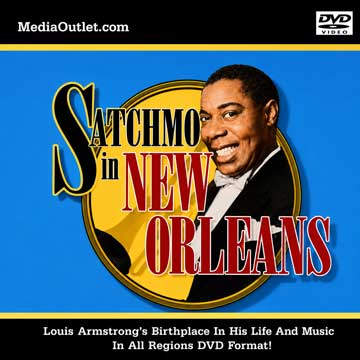
July 4, 1900: #BOTD: #HBD! Traditional
birthday of Louis Armstrong, nicknamed "Satchmo",
"Satch", and "Pops", American trumpeter,
composer, singer and occasional actor who was one of the most
influential figures in American music, popular music and jazz (b.
July 4, 1900 (Traditional), August 4, 1901 (Documented) - July 6,
1971). Louis Armstrong was born Louis Daniel Armstrong New
Orleans; Armstrong often stated that he was born on July 4, 1900,
a date that has been noted in many biographies. Although he died
in 1971, it was not until the mid-1980s that his true birth date,
August 4, 1901, was discovered by the music historian and
researcher Tad Jones through the examination of baptismal records
while researching an unpublished biography of Louis Armstrong's
early life. Pops' career spanned five decades, from the 1920s to
the 1960s, and different eras in music. Coming to prominence in
the 1920s as an "inventive" trumpet and cornet player,
Armstrong was a foundational influence in jazz, shifting the focus
of the music from collective improvisation to solo performance.
With his instantly recognizable gravelly voice, Armstrong was also
an influential singer, demonstrating great dexterity as an
improviser, bending the lyrics and melody of a song for expressive
purposes. He was also originated scat singing on the Hot Five
recording "Heebie Jeebies" in 1926. Louis Armstrong died
of a heart attack in his sleep at his home in Corona, Queens, New
York City on July 6, 1971, a month before his 70th birthday. He is
interred in Flushing Cemetery, Flushing, in Queens, New York City.
His honorary pallbearers included Bing Crosby, Ella Fitzgerald,
Dizzy Gillespie, Pearl Bailey, Count Basie, Harry James, Frank
Sinatra, Ed Sullivan, Earl Wilson, Alan King, Johnny Carson and
David Frost. Peggy Lee sang The Lord's Prayer at the services
while Al Hibbler sang "Nobody Knows the Trouble I've Seen"
and Fred Robbins, a long-time friend, gave the eulogy. Duke
Ellington, quoted in DownBeat magazine in 1971, said, "If
anybody was a master, it was Louis Armstrong. He was and will
continue to be the embodiment of jazz." In 1950, Bing Crosby,
the most successful vocalist of the first half of the 20th
century, said, "He is the beginning and the end of music in
America." On Sale Until Midnight Tonight PT!
https://store.earthstation1.com/satchmo-in-new-orleans-dvd-louis-armstrong-documentary.html
Today's
EarthStation1.com 15% (Or More!) Off Commemorative Memorial Title:
Dwight D. Eisenhower: In War And Peace DVD, Video Download, USB
Drive
Today, July 4, 2026
July 4, 1960: The United States: The
History Of The United States: The National Flag Of The United
States: The Flag Act Of 1818: -- Due to the post-Independence Day
admission of Hawaii as the 50th U.S. state on August 21, 1959, the
50-star flag of the United States debuts in Philadelphia, almost
ten and a half months later. The Flag Act Of 1818 (3 Stat. 415),
enacted by Congress on April 4, 1818, provided for the modern rule
of having the United States flag contain thirteen horizontal
stripes and having the number of stars match the current number of
states. It also provided that future changes in the number of
stars would be effect on the next Independence Day, July 4. As the
result of the lack of a Flag Act between 1794 and 1818, there were
no official U.S. flags with sixteen, seventeen, eighteen, or
nineteen stars. No flag laws were enacted to accompany the
admission of new states to the Union during this period. On Sale
Until Midnight Tonight PT!
https://store.earthstation1.com/dwight-d-eisenhower-documentaries-dual-layer-dvd.html
Today's
EarthStation1.com 15% (Or More!) Off Commemorative Memorial Title:
America: The Second Century Documentary Series DVD, Download, USB
Today, July 4, 2026
July 4, 1894: Hawaii: The History Of
Hawaii: The Republic Of Hawaii (Hawaiian: Lepupalika O Hawai'i):
-- The short-lived Republic of Hawaii is proclaimed by Sanford B.
Dole. The Republic of Hawaii was the formal name of the nation of
Hawaii between July 4, 1894, when the Provisional Government of
Hawaii ended, and August 12, 1898, when it was annexed by the
United States as a territory of the United States. The Territory
of Hawaii was formally established as part of the U.S. on June 14,
1900. The Kingdom of Hawaii was overthrown in 1893 in a mostly
bloodless revolt against Queen Liliuokalani who rejected the
constitution then in effect put there by popular force, commonly
called the Bayonet Constitution. American officials immediately
recognized the new government and U.S. Marines were sent by the US
Ambassador to aid in the overthrow. The Queen's supporters charged
that their presence frightened the Queen and thus enabled the
revolution. The new Republic of Hawaii was led by men of European
ancestry, like Sanford B. Dole and Lorrin A. Thurston, who were
native-born subjects of the Hawaiian kingdom and speakers of the
Hawaiian language, but had strong financial, political, and family
ties to the United States. Dole was a former member of the Kingdom
legislature from Koloa, Kauai, and Justice of the Kingdom's
Supreme Court, and he appointed Thurston-who had served as
Minister of Interior under King Kalakaua-to lead a lobbying effort
in Washington, DC to secure Hawaii's annexation by the United
States. On Sale Until Midnight Tonight PT!
https://store.earthstation1.com/america-the-second-century-us-2nd-100-years-history-621006.html
Today's
EarthStation1.com 15% (Or More!) Off Commemorative Memorial Title:
Frontiers Of Flight Aviation History TV Series DVD, MP4, USB Drive
Today, July 4, 2026
July 4, 1927: Aviation: The History Of
Aviation: The History Of Civil Aviation: Maiden Flights: -- The
Lockheed Vega, an American five-to-seven-seat high-wing monoplane
airliner built by the Lockheed Corporation starting in 1927 which
became famous for its use by a number of record-breaking pilots
who were attracted to its high speed and long range, takes its
maiden flight when the first Vega 1, named the Golden Eagle, flies
from Lockheed's Los Angeles plant. It could cruise at a then-fast
120 mph (190 km/h), and had a top speed of 135 mph (217 km/h). A
number of private owners placed orders for the design, and by the
end of 1928, 68 had been produced. In the 1929 National Air Races
in Cleveland, Ohio, Vegas won every speed award. Amelia Earhart
became the first woman to fly solo across the Atlantic Ocean in
one, and Wiley Post used his to prove the existence of the jet
stream after flying around the world twice. On Sale Until Midnight
Tonight PT!
https://store.earthstation1.com/frontiers-of-flight-aviation-history-tv-series-dvd-mp4-download-us4.html
Today's
EarthStation1.com 15% (Or More!) Off Commemorative Memorial Title:
Jack Benny Presents Golden Memories Of Radio LPs CD, MP3 Download,
USB
Today, July 4, 2026
July 4, 1939: Sports: The History Of
Sports: The History Of Sports In The United States: The History Of
Baseball: The History Of Baseball In The United States: The
History Of Major League Baseball: "The Luckiest Man On The
Face Of The Earth" Speech (Lou Gehrig's Farewell Speech): --
Lou Gehrig, first baseman who played 17 seasons in Major League
Baseball for the New York Yankees, recently diagnosed with
Amyotrophic Lateral Sclerosis (ALS; also known as motor neurone
disease (MND) or Lou Gehrig's Disease), delivers what has been
called "Baseball's Gettysburg Address" to a sold-out
crowd at Yankee Stadium. Having always avoided public attention,
Gehrig did not want to speak, but the crowd chanted for him and he
had memorized some sentences beforehand: "Fans, for the past
two weeks, you've been reading about a bad break. [pause] Today, I
consider myself the luckiest man on the face of the earth. I have
been in ballparks for 17 years and have never received anything
but kindness and encouragement from you fans. When you look
around, wouldn't you consider it a privilege to associate yourself
with such fine-looking men as are standing in uniform in this
ballpark today? Sure, I'm lucky. Who wouldn't consider it an honor
to have known Jacob Ruppert? Also, the builder of baseball's
greatest empire, Ed Barrow? To have spent six years with that
wonderful little fellow, Miller Huggins? Then to have spent the
next nine years with that outstanding leader, that smart student
of psychology, the best manager in baseball today, Joe McCarthy?
Sure, I'm lucky. When the New York Giants, a team you would give
your right arm to beat, and vice versa, sends you a gift - that's
something. When everybody down to the groundskeepers and those
boys in white coats remember you with trophies - that's something.
When you have a wonderful mother-in-law who takes sides with you
in squabbles with her own daughter - that's something. When you
have a father and a mother who work all their lives so you can
have an education and build your body - it's a blessing. When you
have a wife who has been a tower of strength and shown more
courage than you dreamed existed - that's the finest I know. So I
close in saying that I might have been given a bad break, but I've
got an awful lot to live for. - Thank you." The crowd stood
and applauded for almost two minutes. Gehrig was visibly shaken as
he stepped back from the microphone, and wiped the tears away from
his face with his handkerchief. His sometimes-estranged former
teammate Babe Ruth hugged him as a band played "I Love You
Truly" and the crowd chanted, "We love you, Lou!"
The New York Times account the following day called the moment
"one of the most touching scenes ever witnessed on a ball
field" that made even hard-boiled reporters "swallow
hard." Gehrig had played his last game for the Yankees on
April 30, 1939, some two months prior; on July 11, 7 days later,
he appeared at the All-Star Game at Yankee Stadium as the American
League team captain, officially on the roster as a reserve player,
exchanging lineup cards prior to the game. He then officially
retired from baseball. At 10:10 p.m. on June 2, 1941, 17 days
before his 38th birthday, Heinrich Ludwig Gehrig (b. June 19, 1903
at 1994 Second Avenue (according to his birth certificate) in the
Yorkville neighborhood of Manhattan) died at his home at 5204
Delafield Avenue in the Riverdale neighborhood of the Bronx, New
York, aged 37. Upon hearing the news, Babe Ruth and his wife
Claire went to the Gehrig house to console Eleanor. Mayor La
Guardia ordered flags in New York to be flown at half-staff, and
major-league ballparks around the nation did likewise. On Sale
Until Midnight Tonight PT!
https://store.earthstation1.com/jack-benny-presents-golden-memories-of-radio-6-album-set-mp3-63.html
Today's
EarthStation1.com 15% (Or More!) Off Commemorative Memorial Title:
Timeline Middle Ages TV Newscast Series + Bonus MP4 Video Download
DVD
Today, July 4, 2026
July 4, 1187: Religion: The History Of
Religion: Abrahamic Religions: Christianity: The History Of Roman
Catholicism: The Latin Church (Latin: Ecclesia Latina): The Middle
Ages (The Medieval Period, The Mediaeval Period): The Crusades:
The Second Crusade (1147-1149): The Battle Of Hattin (The Battle
Of The Horns Of Hattin): -- The Crusaders cease to be the
pre-eminent military power in the Holy Land as Saladin defeats Guy
of Lusignan, King of Jerusalem, and the Muslims recapture
Jerusalem and go on to conquer and occupy most of the other
Crusader-held cities and castles. Fought between the Crusader
states of the Levant and the forces of the Ayyubid Sultanate of
Egypt led by Sultan Saladin, the Muslim armies under Saladin
captured or killed the vast majority of the Crusader forces,
removing their capability to wage war. These Christian defeats
prompted the Third Crusade, which began two years later. The
Battle Of Hattin is also known as Battle Of The Horns Of Hattin
due to the shape of the nearby extinct volcano of that name. On
Sale Until Midnight Tonight PT!
https://store.earthstation1.com/timeline-tv-series-on-the-middle-ages-in-tv-newscast-format-2-dvd-se2.html
Today's
EarthStation1.com 15% (Or More!) Off Commemorative Memorial Title:
The Battle Of Kursk The Mother Of All Battles + Bonus MP4 Download
DVD
Today, July 4, 2026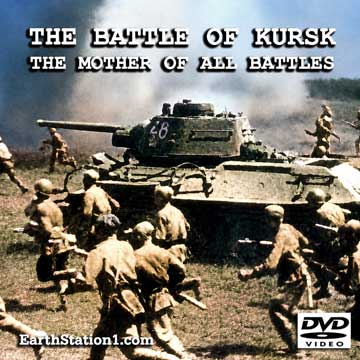
July 4, 1943: The European Civil War:
World War II: The Second European War (The European Theater Of
World War II): The Eastern Front Of World War II: The Great
Patriotic War (The German-Soviet War): The Battle Of Kursk
(Russian: Kurskaya Bitva): -- Preliminary fighting begins in the
Battle Of Kursk, the largest full-scale battle in history and the
world's largest tank battle. Fighting started that evening in the
village of Prokhorovka on the southern face of the salient, when
German infantry launched attacks to seize high ground for
artillery observation posts prior to the main battle that began on
5 July. During these attacks, a number of Red Army command and
observation posts along the first main belt of defence were
captured. By 16:00 on 4 July, elements of the Panzergrenadier
Division "Grossdeutschland", 3rd and 11th Panzer
Divisions had seized the village of Butovo and proceeded to
capture Gertsovka before midnight. At around 22:30, Russian
General Vatutin ordered 600 guns, mortars and Katyusha rocket
launchers, of the Voronezh Front, to bombard the forward German
positions, particularly those of the II SS Panzer Corps. The
Battle Of Kursk was a Second World War engagement between German
and Soviet forces on the Eastern Front near Kursk (450 kilometres
or 280 miles south-west of Moscow) in the Soviet Union, during
July and August 1943. After preliminary engagements of 4 July in
and around Prokhorovka village, the main Battle Of Kursk began
with the launch of the German offensive, Operation Citadel
(German: Unternehmen Zitadelle), on 5 July, which had the
objective of pinching off the Kursk salient with attacks on the
base of the salient from north and south simultaneously. After the
German offensive stalled on the northern side of the salient, on
12 July the Soviets commenced their Kursk Strategic Offensive
Operation with the launch of Operation Kutuzov against the rear of
the German forces in the northern side. On the southern side, the
Soviets also launched powerful counterattacks the same day, one of
which led to a large armoured clash, the Battle of Prokhorovka. On
3 August, the Soviets began the second phase of the Kursk
Strategic Offensive Operation with the launch of Operation
Polkovodets Rumyantsev against the German forces in the southern
side of the Kursk salient. The battle was the final strategic
offensive that the Germans were able to launch on the Eastern
Front. Because the Allied invasion of Sicily had begun, Adolf
Hitler was forced to have troops training in France diverted to
meet the Allied threat in the Mediterranean, rather than use them
as a strategic reserve for the Eastern Front. Hitler canceled the
offensive at Kursk after only a week, in part to divert forces to
Italy, resulting in a reduction of German strength on the Eastern
Front. Germany's extensive losses of men and tanks ensured that
the victorious Soviet Red Army enjoyed the strategic initiative
for the remainder of the war. The Germans hoped to weaken the
Soviet offensive potential for the summer of 1943 by cutting off
the forces that they anticipated would be in the Kursk salient.
The Kursk salient or bulge was 250 kilometres (160 mi) long from
north to south and 160 kilometres (99 mi) from east to west. The
plan envisioned an envelopment by a pair of pincers breaking
through the northern and southern flanks of the salient. Hitler
believed that a victory here would reassert German strength and
improve his prestige with his allies, who were considering
withdrawing from the war. It was also hoped that large numbers of
Soviet prisoners would be captured to be used as slave labour in
the German armaments industry. The Soviet government had
foreknowledge of the German intentions, provided in part by the
British intelligence service's overall intelligence gatherings and
their cryptanalysis of intercepted Lorenz cipher German Army
communications, known as Tunny Intercepts, co-called because
British cryptanalysts, who referred to encrypted German
teleprinter traffic as Fish, dubbed the machine and its traffic
Tunny (meaning tunafish). Aware months in advance that the attack
would fall on the neck of the Kursk salient, the Soviets built a
defence in depth designed to wear down the German armoured
spearhead. The Germans delayed the offensive while they tried to
build up their forces and waited for new weapons, mainly the new
Panther tank but also larger numbers of the Tiger heavy tank. This
gave the Red Army time to construct a series of deep defensive
belts. The defensive preparations included minefields,
fortifications, artillery fire zones and anti-tank strong points,
which extended approximately 300 km (190 mi) in depth. Soviet
mobile formations were moved out of the salient and a large
reserve force was formed for strategic counter-offensives. The
Battle Of Kursk was the first time in the Second World War that a
German strategic offensive was halted before it could break
through enemy defences and penetrate to its strategic depths. The
maximum depth of the German advance was 8-12 kilometres (5.0-7.5
mi) in the north and 35 kilometres (22 mi) in the south. Though
the Red Army had succeeded in winter offensives previously, their
counter-offensives following the German attack at Kursk were their
first successful strategic summer offensives of the war. On Sale
Until Midnight Tonight PT!
https://store.earthstation1.com/the-battle-of-kursk-the-mother-of-all-battles-wwii-dvd-mp4-usb-driv4.html
Today's
EarthStation1.com 15% (Or More!) Off Commemorative Memorial Title:
The Life And Times Of Lord Mountbatten TV Series DVD, Download,
USB
Today, July 4, 2026
July 4, 1947: India: The History Of
India: The British Raj (Crown Rule In India, Direct Rule In India,
India, The Indian Empire): The Indian Independence Movement: The
Pakistan Movement: The Partition Of India: The Indian Independence
Act 1947 (10 & 11 Geo. 6. c. 30) (The Indian Independence
Bill): -- The Indian Independence Bill, ultimately to be known as
The Indian Independence Act 1947, is presented before the British
House Of Commons, proposing the independence of the Provinces of
British India into two sovereign countries: India and Pakistan.
Eleven days later, on July 15, 1947 the House of Commons voted for
the bill, and the House of Lords gave its consent on the next day.
The act received Royal Assent on 18 July 1947 and thus modern-day
India and Pakistan, comprising west (modern day Pakistan) and east
(modern day Bangladesh) regions, came into being on August 15.
Lord Mountbatten's experience in the region and in particular his
perceived Labour sympathies at that time led to Clement Attlee
appointing him Viceroy of India on 20 February 1947, charged with
overseeing the transition of British India to independence no
later than June 30, 1948. Mountbatten's instructions emphasised a
united India as a result of the transference of power but
authorized him to adapt to a changing situation in order to get
Britain out promptly with minimal reputational damage. Soon after
he arrived, Mountbatten concluded that the situation was too
volatile for even that short a wait. Although his advisers
favoured a gradual transfer of independence, Mountbatten decided
the only way forward was a quick and orderly transfer of
independence before 1947 was out. In his view, any longer would
mean civil war. On Sale Until Midnight Tonight PT!
https://store.earthstation1.com/life-and-times-of-lord-mountbatten-3-dvds-tv-series-all-12-pa312.html
Today's
EarthStation1.com 15% (Or More!) Off Commemorative Memorial Title:
Statue Of Liberty Films Collection DVD, Video Download, USB Drive
Today, July 4, 2026
July 4, 2009: The War On Terror (The
Global War On Terrorism [GWOT]): The September 11 Attacks (9/11):
National Personifications: National Personifications Of The United
States: National Monuments: National Monuments Of The United
States: The Statue Of Liberty (Liberty Enlightening The World)
(French: La Liberte Eclairant Le Monde): -- The Statue Of
Liberty's crown reopens to the public after eight years of closure
due to security concerns following the September 11 attacks. On
Sale Until Midnight Tonight PT!
https://store.earthstation1.com/statue-of-liberty-dvd-historical-films.html
Today's
EarthStation1.com 15% (Or More!) Off Commemorative Memorial Title:
Walt Whitman Documentary Biography DVD, Video Download, USB Drive
Today, July 4, 2026
July 4, 1855: First Publications: -- The
first edition of Walt Whitman's book of poems, Leaves of Grass, is
published in Brooklyn. Leaves of Grass is a poetry collection by
the American poet Walt Whitman (1819-1892). Although the first
edition was published in 1855, Whitman spent most of his
professional life writing and re-writing Leaves of Grass, revising
it multiple times until his death. This resulted in vastly
different editions over four decades-the first, a small book of
twelve poems and the last, a compilation of over 400. The poems of
Leaves of Grass are loosely connected, with each representing
Whitman's celebration of his philosophy of life and humanity. This
book is notable for its discussion of delight in sensual pleasures
during a time when such candid displays were considered immoral.
Where much previous poetry, especially English, relied on
symbolism, allegory, and meditation on the religious and
spiritual, Leaves of Grass (particularly the first edition)
exalted the body and the material world. Influenced by Ralph Waldo
Emerson and the Transcendentalist movement, itself an offshoot of
Romanticism, Whitman's poetry praises nature and the individual
human's role in it. However, much like Emerson, Whitman does not
diminish the role of the mind or the spirit; rather, he elevates
the human form and the human mind, deeming both worthy of poetic
praise. With one exception, the poems do not rhyme or follow
standard rules for meter and line length. Among the poems in the
collection are "Song of Myself", "I Sing the Body
Electric", and "Out of the Cradle Endlessly Rocking".
Later editions included Whitman's elegy to the assassinated
President Abraham Lincoln, "When Lilacs Last in the Dooryard
Bloom'd". Leaves of Grass was highly controversial during its
time for its explicit sexual imagery, and Whitman was subject to
derision by many contemporary critics. Over time, however, the
collection has infiltrated popular culture and been recognized as
one of the central works of American poetry. On Sale Until
Midnight Tonight PT!
https://store.earthstation1.com/walt-whitman-dvd-biography-poetry-documentary.html
Today's
EarthStation1.com 15% (Or More!) Off Commemorative Memorial Title:
NBC University Theater Of The Air Literature Radio Series MP3 DVD
USB
Today, July 4, 2026
July 4, 1804: #BOTD: #HBD! Nathaniel
Hawthorne, American novelist, dark romantic, and short story
writer whose works often focus on history, morality, and religion
(d. May 19, 1864) is #born Nathaniel Hawthorne in Salem,
Massachusetts, to Nathaniel Hathorne and the former Elizabeth
Clarke Manning. His ancestors include John Hathorne, the only
judge involved in the Salem witch trials who never repented of his
actions. He entered Bowdoin College in 1821, was elected to Phi
Beta Kappa in 1824, and graduated in 1825. He published his first
work in 1828, the novel Fanshawe; he later tried to suppress it,
feeling that it was not equal to the standard of his later work.
He published several short stories in periodicals, which he
collected in 1837 as Twice-Told Tales. The next year, he became
engaged to Sophia Peabody. He worked at the Boston Custom House
and joined Brook Farm, a transcendentalist community, before
marrying Peabody in 1842. The couple moved to The Old Manse in
Concord, Massachusetts, later moving to Salem, the Berkshires,
then to The Wayside in Concord. The Scarlet Letter was published
in 1850, followed by a succession of other novels. A political
appointment as consul took Hawthorne and family to Europe before
their return to Concord in 1860. Much of Hawthorne's writing
centers on New England, many works featuring moral metaphors with
an anti-Puritan inspiration. His fiction works are considered part
of the Romantic movement and, more specifically, dark romanticism.
His themes often center on the inherent evil and sin of humanity,
and his works often have moral messages and deep psychological
complexity. His published works include novels, short stories, and
a biography of his college friend Franklin Pierce, the 14th
President of the United States. Nathaniel Hawthorne died in his
sleep in Plymouth, New Hampshire aged 59. Former American
President Franklin Pierce sent a telegram to Elizabeth Peabody
asking her to inform her sister, Mrs. Sophia Hawthorne in person.
Mrs. Hawthorne was too saddened by the news to handle the funeral
arrangements herself. Hawthorne's son Julian, a freshman at
Harvard College, learned of his father's death the next day;
coincidentally, he was initiated into the Delta Kappa Epsilon
fraternity on the same day by being blindfolded and placed in a
coffin. Longfellow wrote a tribute poem to Hawthorne published in
1866 called "The Bells of Lynn". Hawthorne was buried on
what is now known as "Authors' Ridge" in Sleepy Hollow
Cemetery, Concord, Massachusetts. Pallbearers included Longfellow,
Emerson, Alcott, Oliver Wendell Holmes Sr., James T. Fields, and
Edwin Percy Whipple. Emerson wrote of the funeral: "I thought
there was a tragic element in the event, that might be more fully
rendered -- in the painful solitude of the man, which, I suppose,
could no longer be endured, & he died of it." His wife
Sophia and daughter Una were originally buried in England.
However, in June 2006, they were reinterred in plots adjacent to
Hawthorne. On Sale Until Midnight Tonight PT!
https://store.earthstation1.com/nbc-university-theater-of-the-air-otr-mp3-dv3.html
Today's
EarthStation1.com 15% (Or More!) Off Commemorative Memorial Title:
Neil Simon: Not Just For Laughs DVD, MP4 Video Download, Flash
Drive
Today, July 4, 2026
July 4, 1927: #BOTD: #HBD! Neil Simon,
American playwright, screenwriter and author (d. August 26, 2018)
is #born Marvin Neil Simon in The Bronx, New York City, to Jewish
parents. His father, Irving Simon, was a garment salesman, and his
mother, Mamie (Levy) Simon, was mostly a homemaker. Neil had one
brother, eight years his senior, television writer and comedy
teacher Danny Simon, with whom he had a close and loving
relationship. Neil Simon wrote more than 30 plays and nearly the
same number of movie screenplays, mostly adaptations of his plays.
He received more combined Oscar and Tony nominations than any
other writer. Simon grew up in New York City during the Great
Depression, with his parents' financial hardships affecting their
marriage, giving him a mostly unhappy and unstable childhood. He
often took refuge in movie theaters where he enjoyed watching the
early comedians like Charlie Chaplin. After graduating from high
school and a few years in the Army Air Force Reserve, he began
writing comedy scripts for radio and some popular early television
shows. Among them were Sid Caesar's Your Show of Shows from 1950
(where he worked alongside other young writers including Carl
Reiner, Mel Brooks and Selma Diamond), and The Phil Silvers Show,
which ran from 1955 to 1959. He began writing his own plays
beginning with Come Blow Your Horn (1961), which took him three
years to complete and ran for 678 performances on Broadway. It was
followed by two more successful plays, Barefoot in the Park (1963)
and The Odd Couple (1965), for which he won a Tony Award. It made
him a national celebrity and "the hottest new playwright on
Broadway." During the 1960s to 1980s, he wrote both original
screenplays and stage plays, with some films actually based on his
plays. His style ranged from romantic comedy to farce to more
serious dramatic comedy. Overall, he garnered 17 Tony nominations
and won three. During one season, he had four successful plays
running on Broadway at the same time, and in 1983 became the only
living playwright to have a New York theatre, the Neil Simon
Theatre, named in his honor. Neil Simon died of pneumonia at New
York-Presbyterian Hospital in Manhattan while hospitalized for
kidney failure. He was 91 years old when he died, and was also
suffering from Alzheimer's disease. He is buried at Pound Ridge
Cemetery in Pound Ridge, New York. On Sale Until Midnight Tonight
PT!
https://store.earthstation1.com/neil-simon-not-just-for-laughs-his-life-and-plays-dvd.html
Today's
EarthStation1.com 15% (Or More!) Off Commemorative Memorial Title:
Roots Of Resistance: The Underground Railroad DVD, MP4, USB Drive
Today, July 4, 2026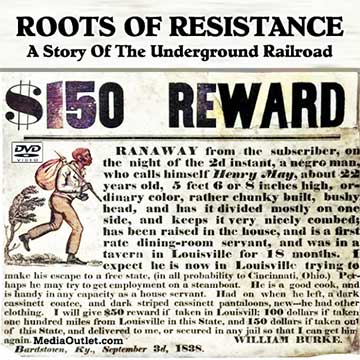
July 4, 1827: Slavery: Slavery In The
United States: Slavery In New York State: -- Slavery is abolished
in New York State when its last slave was freed. New York State
had passed a law for the gradual abolition of slavery soon after
the Revolutionary War, but that "gradual" process took
some forty years. Both the Dutch and the British imported African
slaves as laborers to the city and colony; New York, with its high
population, had the second-highest population of slaves after
Charleston, South Carolina. Prior to the state's final
emancipation, slavery was extensive in New York City and some
agricultural areas. On Sale Until Midnight Tonight PT!
https://store.earthstation1.com/roots-of-resistance-a-story-of-the-underground-railroad-dvd.html
Today's
EarthStation1.com 15% (Or More!) Off Commemorative Memorial Title:
Black Civil Rights Films: African-American History DVD, MP4, USB
Stick
Today, July 4, 2026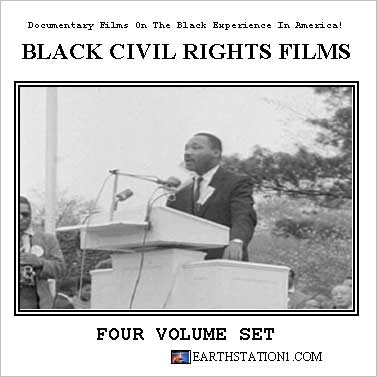
July 4, 1881: Grand Openings: Higher
Education: Higher Education In The United States: Historically
Black Colleges And Universities (HBCUs): Tuskegee University
(Tuskegee, TU, formerly The Tuskegee Institute): -- The Tuskegee
Institute, a private, historically black university (HBCU) located
in Tuskegee, Alabama established by Booker T. Washington, opens.
The campus is designated as the Tuskegee Institute National
Historic Site by the National Park Service and is the only one in
the U.S. to have this designation. The university was home to
scientist George Washington Carver and to World War II's Tuskegee
Airmen. From 1932 to 1972, Tuskegee Institute collaborated with
the United States government in the Tuskegee Syphilis Experiment
by which the effects of deliberately untreated syphilis were
studied. These Tuskegee syphilis experiments have become infamous
for misleading study participants by telling them that they were
being treated for syphilis when in fact researchers were only
monitoring the progression of the disease. Researchers even
actively deterred study participants from obtaining penicillin,
which was emerging as the definitive treatment for syphilis. This
experiment was conducted by the U.S. Public Health Service in
collaboration with the Tuskegee Institute. On Sale Until Midnight
Tonight PT!
https://store.earthstation1.com/black-civil-rights-films-africanamerican-history-dvd.html
Today's
EarthStation1.com 15% (Or More!) Off Commemorative Memorial Title:
JFK A Time Remembered Documentary DVD, Video Download, USB Flash
Drive
Today, July 4, 2026
July 4, 1963: Awards And Decorations:
Civil Awards And Decorations: Civil Awards And Decorations Of The
United States: The Presidential Medal Of Freedom: -- President
John F. Kennedy establishes The Presidential Medal Of Freedom
through Executive Order 11085, and awards the first medals to
Marian Anderson, African American opera star, and Ralph Bunche,
African American diplomat and Nobel Peace Prize recipient. The
Presidential Medal Of Freedom was the first U.S. civilian neck
decoration and, if awarded with Distinction, is the only U.S. sash
and star decoration (the Chief Commander degree of the Legion of
Merit - which may only be awarded to foreign heads of state - is a
star decoration but without a sash). The executive order calls for
the medal to be awarded annually on or around July 4, and at other
convenient times as chosen by the president, but it has not been
awarded every year (e.g., 2001, 2010). Recipients are selected by
the president, either on the president's own initiative or based
on recommendations. The order establishing the medal also expanded
the size and the responsibilities of the Distinguished Civilian
Service Awards Board so it could serve as a major source of such
recommendations. The medal may be awarded to an individual more
than once; Colin Powell received two awards, his second being with
Distinction; Ellsworth Bunker received both of his awards with
Distinction. It may also be awarded posthumously; examples include
John F. Kennedy, Pope John XXIII, Lyndon Johnson, John Wayne, Paul
"Bear" Bryant, Thurgood Marshall, Cesar Chavez, Walter
Reuther, Roberto Clemente, Jack Kemp, Harvey Milk, James Chaney,
Andrew Goodman, Michael Schwerner, Elouise Cobell, Grace Hopper,
Antonin Scalia, Elvis Presley and Babe Ruth. (Chaney, Goodman and
Schwerner, civil rights workers murdered in 1964, were awarded
their medals in 2014, 50 years later.) On Sale Until Midnight
Tonight PT!
https://store.earthstation1.com/jfk-a-time-remembered-dvd-documentary.html
Today's
EarthStation1.com 15% (Or More!) Off Commemorative Memorial Title:
The Making Of The President 1964 LBJ & Goldwater Campaigns MP4
Or DVD
Today, July 4, 2026
July 4, 1964: Anti-Black Racism:
Anti-Black Racism In The United States: Segregation: Racial
Segregation: The Civil Rights Act of 1964: Tne Fraud, Sham, And
Hoax Speech Of George Wallace: -- Alabama Governor George C.
Wallace gives a speech at a states rights rally in Atlanta in
which he denounces President Lyndon B. Johnson for signing the
1964 Civil Rights Act just two days prior, which act he calls "a
fraud, a sham and a hoax". Now known as The Fraud, Sham, And
Hoax Speech, it is cited in academia as a prime example of
segregationist thought of that era, as well as of rhetoric crafted
to appeal almost solely to emotion rather than logic, reason, or
fact. On Sale Until Midnight Tonight PT!
https://store.earthstation1.com/the-making-of-the-president-1964-dvd-johnson-goldwater-campa1964.html
Today's
EarthStation1.com 15% (Or More!) Off Commemorative Memorial Title:
1968: A CBS News Special Report Harry Reasoner DVD, MP4, USB Drive
Today, July 4, 2026
July 4, 1966: The United States: The
History Of The United States: Freedom Of Information: Freedom Of
Information In The United States: Freedom Of Information
Legislations: Freedom Of Information Legislation In The United
States: The Freedom Of Information Act (FOIA): -- U.S. President
Lyndon B. Johnson signs the Freedom Of Information Act into United
States law, and went into effect the following year. The Freedom
Of Information Act (FOIA) is a federal freedom of information law
that requires the full or partial disclosure of previously
unreleased information and documents controlled by the United
States government upon request. The act defines agency records
subject to disclosure, outlines mandatory disclosure procedures,
and defines nine exemptions to the statute. The act was intended
to make U.S. government agencies' functions more transparent so
that the American public could more easily identify problems in
government functioning and put pressure on Congress, agency
officials, and the president to address them. The FOIA has been
changed repeatedly by both the legislative and executive branches.
Apart from the U.S. federal government's Freedom Of Information
Act, the U.S. states have their own varying freedom of information
laws. While the public may be aware of news organizations' use of
FOIA for reporting purposes, it makes up less than 10% of all
requests with businesses, law firms, and individuals all being
more frequent users. On Sale Until Midnight Tonight PT!
https://store.earthstation1.com/1968-dvd-cbs-news-special-report-10-years-later-harry-re196810.html
Today's
EarthStation1.com 15% (Or More!) Off Commemorative Memorial Title:
The World: A Television History Documentary Series DVD, Download,
USB
Today, July 4, 2026
July 4, 1807: #BOTD: #HBD! Giuseppe
Garibaldi, Italian general, politician, nationalist and Freemason
who played a large role in the history of Italy, considered, with
Camillo Benso, Count of Cavour, Victor Emmanuel II of Italy and
Giuseppe Mazzini as one of Italy's "Fathers Of The
Fatherland" (d. June 2, 1882) is #born Giuseppe Maria
Garibaldi in Nice, which had been conquered by the French First
Republic in 1792, to the Ligurian family of Domenico Garibaldi
from Chiavari and Maria Rosa Nicoletta Raimondi from Loano. In
1814, the Congress of Vienna returned Nice to Victor Emmanuel I of
Sardinia; nevertheless, France re-annexed it in 1860 by the Treaty
of Turin, which was ardently opposed by Garibaldi. Garibaldi's
family's involvement in coastal trade drew him to a life at sea.
He participated actively in the Nizzardo Italians community and
was certified in 1832 as a merchant navy captain. Garibaldi
personally commanded and fought in many military campaigns that
led eventually to the Italian unification. He was appointed
general by the provisional government of Milan in 1848, General of
the Roman Republic in 1849 by the Minister of War, and led the
Expedition of the Thousand on behalf and with the consent of
Victor Emmanuel II. He has been called the "Hero of Two
Worlds" because of his military enterprises in Brazil,
Uruguay and Europe. These earned him a considerable reputation in
Italy and abroad, aided by exceptional international media
coverage at the time. Many of the greatest intellectuals of his
time, such as Victor Hugo, Alexandre Dumas, and George Sand,
showered him with admiration. The United Kingdom and the United
States helped him a great deal, offering him financial and
military support in difficult circumstances. Giuseppe Garibaldi
died in Caprera, an island in the Maddalena archipelago off the
coast of Sardinia, dying on a death bed he had been confined to in
his final years and had moved to where he could view the sea as he
died, aged 75. His wishes for a simple funeral and cremation were
not respected. He was buried in his farm on the island of Caprera
alongside his last wife and some of his children. On Sale Until
Midnight Tonight PT!
https://store.earthstation1.com/the-world-a-television-history-4-dual-layer-dvds-all-26-sh426.html
Today's
EarthStation1.com 15% (Or More!) Off Commemorative Memorial Title:
Soup To Nuts (1930) The Three Stooges Rube Goldberg DVD, Download,
USB
Today, July 4, 2026
July 4, 1883: #BOTD: #HBD! Rube Goldberg,
American cartoonist, sculptor, author, engineer and inventor (d.
December 7, 1970) is #born Reuben Garrett Lucius Goldberg in San
Francisco, California, to Jewish parents Max and Hannah (nee Cohn)
Goldberg. Goldberg is best known for his popular cartoons
depicting complicated gadgets performing simple tasks in indirect,
convoluted ways. The cartoons led to the expression "Rube
Goldberg machines" to describe similar gadgets and processes.
Goldberg received many honors in his lifetime, including a
Pulitzer Prize for political cartooning in 1948 and the Banshees'
Silver Lady Award in 1959. He was a founding member and first
president of the National Cartoonists Society and the namesake of
the Reuben Award, which the organization awards to its Cartoonist
of the Year. He is the inspiration for international competitions
known as Rube Goldberg Machine Contests which challenge
participants to create a complicated machine to perform a simple
task. Rube Goldberg died of cancer at his 169 East 69th Street
home in New York City at the age of 87. He is buried in Mount
Pleasant Cemetery in Hawthorne, New York. On Sale Until Midnight
Tonight PT!
https://store.earthstation1.com/soup-to-nuts-dvd-three-stooges-rube-goldberg.html
Today's
EarthStation1.com 15% (Or More!) Off Commemorative Memorial Title:
The Machine That Changed The World: The Computer DVD MP4 Download
Today, July 4, 2026
July 4, 1951: Great Inventions: The
History Of Electronics: The History Of Electronic Components: The
History Of Semiconductors: The History Of Semiconductor Devices:
Great Inventions: The Transistor: -- The Bipolar Junction
Transistor (BJT) (The Junction Transistor): -- William Shockley
announces the invention of the junction transistor, a type of
transistor that uses both electrons and electron holes as charge
carriers. In contrast, a unipolar transistor, such as a
field-effect transistor, uses only one kind of charge carrier. A
bipolar transistor allows a small current injected at one of its
terminals to control a much larger current flowing between the
terminals, making the device capable of amplification or
switching. BJTs use two junctions between two semiconductor types,
n-type and p-type, which are regions in a single crystal of
material. The junctions can be made in several different ways,
such as changing the doping of the semiconductor material as it is
grown, by depositing metal pellets to form alloy junctions, or by
such methods as diffusion of n-type and p-type doping substances
into the crystal. The superior predictability and performance of
junction transistors quickly displaced the original point-contact
transistor. Diffused transistors, along with other components, are
elements of integrated circuits for analog and digital functions.
Hundreds of bipolar junction transistors can be made in one
circuit at very low cost. Bipolar transistor integrated circuits
were the main active devices of a generation of mainframe and mini
computers, but most computer systems now use integrated circuits
relying on field-effect transistors. Bipolar transistors are still
used for amplification of signals, switching, and in digital
circuits. Specialized types are used for high voltage switches,
for radio-frequency amplifiers, or for switching high currents. On
Sale Until Midnight Tonight PT!
https://store.earthstation1.com/the-machine-that-changed-the-world-the-computer-dvd-mp4-downloa4.html
Today's
EarthStation1.com 15% (Or More!) Off Commemorative Memorial Title:
Frank Sinatra: The Voice Of Our Time DVD, Video Download, USB
Drive
Today, July 4, 2026
July 4, 1911: #BOTD: #HBD! Mitch Miller,
American singer, oboist, conductor, record producer and record
industry executive (d. July 31,2010) #born Mitchell William Miller
to a Jewish family in Rochester, New York. He was involved in
almost all aspects of the music industry, particularly as a
conductor and artist and repertoire (A & R) man. Miller was
one of the most influential people in American popular music
during the 1950s and early 1960s, both as the head of A & R at
Columbia Records and as a best-selling recording artist with an
NBC television series, Sing Along with Mitch. A graduate of the
Eastman School of Music of the University of Rochester in the
early 1930s, Miller began his musical career as a player of the
oboe and English horn, making numerous highly regarded classical
and popular recordings. He was a choral conductor on television
and a recordings executive. Music historian Will Friedwald wrote
in his book Jazz Singing (Da Capo Press, 1996) that "Miller
exemplified the worst in American pop. He first aroused the ire of
intelligent listeners by trying to turn - and darn near succeeding
in turning - great artists like Sinatra, Clooney, and Tony Bennett
into hacks. Miller chose the worst songs and put together the
worst backings imaginable - not with the hit-or-miss attitude that
bad musicians traditionally used, but with insight, forethought,
careful planning, and perverted brilliance." On Sale Until
Midnight Tonight PT!
https://store.earthstation1.com/frank-sinatra-the-voice-of-our-time-dvd-documentary.html
Today's
EarthStation1.com 15% (Or More!) Off Commemorative Memorial Title:
The Golden Age Of Rock 'N' Roll DVD, MP4 Video Download, Flash
Drive
Today, July 4, 2026
( #JCKaelin here: I saw Canned Heat
perform live at the legendary Fillmore East theater in 1968 at the
tender age of 7. It was so loud that I was screaming at the top of
my lungs and still couldn't hear myself. The Bear spent much of
the performance trying to fix bassist Larry Taylor's amp which
kept breaking down. The Bear, aptly named because he was enormous,
was wearing a pair of lemon yellow colored Dr. Denton pajamas.
What a weird, wonderful, unforgettable experience! : ) ) =========
July 4, 1943: #BOTD: #HBD! Alan Wilson, nicknamed "Blind
Owl", American singer, songwriter, harmonica player and
guitarist, co-founder, leader, and primary composer for the
American blues band Canned Heat (d. September 3, 1970) is #born
Alan Christie Wilson in Arlington, Massachusetts. He played
harmonica, guitar, and sang with the group live and on recordings.
Wilson was lead singer on Canned Heat's two biggest U.S. hit
singles, : "On the Road Again" and "Going Up the
Country". His death at age 27 prefigured that of some of the
other rock artists of the 1960s and later known as the 27 Club is
an informal list consisting mostly of popular musicians, artists,
actors, and other celebrities who died at age 27. Alan Wilson died
in his sleeping bag on the hillside behind Hite's Topanga Canyon
home where he often slept, aged 27 years. An autopsy identified
his manner and cause of death as accidental acute barbiturate
intoxication; although his death has been sometimes reported as a
suicide, he left no suicide note, and there were four pills left
in his pants found next to his body. Wilson's death came fourteen
months after the death of Brian Jones, just two weeks before the
death of Jimi Hendrix, four weeks before the death of Janis
Joplin, and ten months before the death of Jim Morrison, four
artists who also died at the same age. Wilson was cremated, and on
September 13, 1970 a memorial service was held at Menotomy Rocks
Park in his hometown of Arlington. The service was led by Reverend
Wilbur Canaday who said, "We are using the sky as a roof, and
the ground as a floor, because he himself used nature's great
wonders as his home." Wilson's remains were cremated, and his
ashes were later scattered in Sequoia National Park amongst the
redwoods he deeply loved. On Sale Until Midnight Tonight PT!
https://store.earthstation1.com/the-golden-age-of-rock-39n39-roll-dvd-complete-tv-series-5-39395.html
Today's
EarthStation1.com 15% (Or More!) Off Commemorative Memorial Title:
WABC Radio Airchecks MP3 Collection 1960s-1980s DVD, MP3 Download,
USB
Today, July 4, 2026
July 4, 1938: #BOTD: #HBD! Bill Withers,
African American singer, songwriter, guitarist, keyboardist and
producer (d. March 30, 2020) is #born William Harrison Withers Jr.
in the small coal mining town of Slab Fork, West Virginia, the
youngest of six children. Withers recorded several major hits,
including "Ain't No Sunshine" (1971), "Grandma's
Hands" (1971), "Use Me" (1972), "Lean on Me"
(1972), "Lovely Day" (1977), and "Just the Two of
Us" (1980). Withers won three Grammy Awards and was nominated
for six more. His life was the subject of the 2009 documentary
film Still Bill. He was inducted into the Songwriters Hall of Fame
in 2005 and Rock and Roll Hall of Fame in 2015. Two of his songs
were inducted into the Grammy Hall of Fame. Withers worked as a
professional musician for just 15 years, from 1970 to 1985, after
which he moved on to other occupations. His disdain for Columbia's
A & R (Artists & Repetoire) executives or "blaxperts",
as he termed them, trying to exert control over how he should
sound if he wanted to sell more albums, played a part in his
decision to not record or re-sign to a record label after 1985,
effectively ending his performing career, even though remixes of
his previously recorded music were released well after his
'retirement'. Finding musical success later in life than most, at
32, he said he was socialized as a 'regular guy' who had a life
before the music, so he did not feel an inherent need to keep
recording once he fell out of love with the industry. After he
left the music industry he said that he did not miss touring and
performing live and did not regret leaving music behind. Bill
Withers died from heart complications in a Los Angeles hospital on
March 30, 2020, at age 81; his family announced his death four
days later. The family statement read "We are devastated by
the loss of our beloved, devoted husband and father. A solitary
man with a heart driven to connect to the world at large, with his
poetry and music, he spoke honestly to people and connected them
to each other. As private a life as he lived close to intimate
family and friends, his music forever belongs to the world. In
this difficult time, we pray his music offers comfort and
entertainment as fans hold tight to loved ones. He is interred in
the Forest Lawn Memorial Park, Hollywood Hills, Los Angeles,
California. On Sale Until Midnight Tonight PT!
https://store.earthstation1.com/wabc-musicradio-shows-mp3-dvd-60s80s-am-360807775.html
Today's
EarthStation1.com 15% (Or More!) Off Commemorative Memorial Title:
Lucky Luciano Documentary Biography MP4 Video Download DVD
Today, July 4, 2026
July 4, 1902: #BOTD: Meyer Lansky,
American gangster known as the "Mob's Accountant", major
organized crime figure who, along with his associate Charles
"Lucky" Luciano, was instrumental in the development of
the National Crime Syndicate in the United States (d. January 15,
1983) is #born Maier Suchowljansky in Grodno, Russian Empire (now
Belarus), to a Polish-Jewish family who experienced antisemitism
and pogroms from Imperial authorities. When asked about his native
country, Lansky always responded "Poland". In 1911,
Lansky emigrated at age nine to the United States through the port
of Odessa (now in Ukraine) with his mother and brother Jacob, and
joined his father, who had immigrated in 1909, and settled on the
Lower East Side of Manhattan, New York. Lansky met Benjamin
"Bugsy" Siegel when they were children. They became
lifelong friends, as well as partners in the bootlegging trade,
and together managed the Bugs and Meyer Mob, with its reputation
as one of the most violent Prohibition gangs. Lansky was also
close friends with Charles "Lucky" Luciano; the two met
as teenagers when Luciano attempted to extort Lansky for
protection money on his walk home from school. Luciano respected
the younger boy's defiant responses to his threats, and the two
formed a lasting partnership thereafter. The two of them would go
on to associate with veteran gangster Arnold Rothstein, up until
his murder in 1928. A member of the Jewish mob, Lansky developed a
gambling empire that stretched across the world. He was said to
own points (percentages) in casinos in Las Vegas, Cuba, The
Bahamas and London. Although a member of the Jewish Mob, Lansky
undoubtedly had strong influence with the Italian-American Mafia
and played a large role in the consolidation of the criminal
underworld. The full extent of this role has been the subject of
some debate, as Lansky himself denied many of the accusations
against him. In the 1930s, Lansky and his gang stepped outside
their usual criminal activities to break up rallies held by the
pro-Nazi German-American Bund. He recalled a particular rally in
Yorkville, a German neighborhood in Manhattan, that he and
fourteen other associates disrupted: "The stage was decorated
with a swastika and a picture of Adolf Hitler. The speakers
started ranting. There were only fifteen of us, but we went into
action. We threw some of them out the windows. Most of the Nazis
panicked and ran out. We chased them and beat them up. We wanted
to show them that Jews would not always sit back and accept
insults". During World War II, Lansky was also instrumental
in helping the Office of Naval Intelligence (ONI)'s Operation
Underworld, in which the government recruited criminals to watch
out for German infiltrators and submarine-borne saboteurs. Lansky
helped arrange a deal with the government via a high-ranking
United States Navy official. This deal secured the release of
Luciano from prison; in exchange, the Mafia would provide security
for the warships that were being built along the docks in New York
Harbor. German submarines were sinking Allied ships in great
numbers along the eastern seaboard and the Caribbean coast, and
there was great fear of attack or sabotage by Nazi sympathizers.
Lansky connected the ONI with Luciano, who reportedly instructed
Joseph Lanza to prevent sabotage on the New York waterfront.
Lansky is credited with having "controlled" compromising
pictures of a sexual nature featuring former FBI director, J.
Edgar Hoover with his longtime aide, Clyde Tolson. In his book,
Official and Confidential: The Secret Life of J. Edgar Hoover,
biographer Anthony Summers cites multiple primary sources
regarding Lansky's use of blackmail to gain influence with
politicians, policemen and judges. One such stage for the
acquisition of blackmail materials were orgies held by late
attorney and Lansky protege, Roy Cohn, and liquor magnate, Lewis
Rosenstiel, who had lasting ties with the Mafia from his bootleg
operations during Prohibition. The release of FBI files on Lansky
revealed extensive monitoring and investigation, which makes it
harder to explain why Lansky was not pursued to conviction, unless
he successfully evaded it by blackmail. Cohn copied this model of
blackmail to control politicians and evade conviction himself.
Despite nearly 50 years as a member/participant in organized
crime, Lansky was never found guilty of anything more serious than
illegal gambling. He has a legacy of being one of the most
financially successful gangsters in American history. Meyer Lansky
died of lung cancer aged 80 in Miami where he spent his last years
quietly in retirement at his home in Miami Beach, Florida, leaving
a widow and three children. He is buried at Mount Nebo Miami
Memorial Gardens in West Miami, Florida in the northwest corner of
the cemetery, right next to the road. On paper, Lansky was worth
almost nothing. Before he fled Cuba in the aftermath of the Cuban
Revolution, Lansky was said to be worth an estimated 20M USD
(equivalent to 166M USD in 2021); when he died in 1983, his family
learned that his estate was only worth around 57K USD (equivalent
to 167,477 USD in 2022) -- despite this, the FBI believed he left
behind over 300M USD (744M USD in 2022) in hidden bank accounts,
but they never found any money. This would be equivalent to 744M
USD in 2022. On Sale Until Midnight Tonight PT!
https://store.earthstation1.com/lucky-luciano-documentary-biography-mp4-video-download-dv4.html
Today's
EarthStation1.com 15% (Or More!) Off Commemorative Memorial Title:
Barnum's Big Top: P. T. Barnum's Circuses + 2 Bonuses MP4 Download
DVD
Today, July 4, 2026
July 4, 1847: #BOTD: #HBD! James Anthony
Bailey, American circus ringmaster, co-founded Ringling Bros. and
Barnum & Bailey Circus (d. April 11, 1906) is #born James
Anthony McGinnis to Edward and Hannora McGinnis in Detroit,
Michigan. Edward McGinnis died in October, 1849 of cholera and in
1855, James was orphaned when his mother died. James then went to
live with his older sister, Catherine Gordon. Life with Catherine
was difficult as she tended to be overbearing and harsh. Sometime
between 1859 and 1860, James ran away from Catherine's home and
found a job and a place to stay on a farm about 10 miles outside
the city of Pontiac, Michigan. Finding life on the farm
unrewarding, 13-year old James wandered into Pontiac where he
found work at the Hodges House Hotel. After working at the hotel
for a time, he was discovered by Colonel Frederic Harrison Bailey,
a nephew of circus pioneer Hachaliah Bailey, and an advance man
for John Robinson and Bill Lake's traveling circus. F.H. Bailey
gave McGinnis a job as his assistant, and the two traveled
together for many years. McGinnis eventually adopted F.H. Bailey's
surname to become James A. Bailey. In his diary, James'
brother-in-law Joe McCaddon writes that Bailey recounted stories
of how he left the circus world at age 16 and went to work as
clerk to a sutler during the Civil War (a sutler or victualer is a
civilian merchant who sells provisions to an army in the field, in
camp, or in quarters). In 1866, with the war over, he went back to
work for Bill Lake, who now owned his own circus with his wife
Agnes Thatcher Lake. During this time, James met Ruth Louisa
McCaddon of Zanesville, Ohio. James and Ruth became friends, fell
in love, and were married in December 1868. The very next year in
Granby, Missouri, Bill Lake was shot and killed. With her husband
dead, Agnes Lake became the first woman in the United States to
own a circus (Agnes Lake would later marry famous gunfighter Wild
Bill Hickok, who worked for a short time with Buffalo Bill Cody,
whose Wild West Show James A. Bailey would one day manage). Bailey
later associated with James E. Cooper, and by the time he was 22,
he was manager of the Cooper and Bailey circus. He then met with
P.T. Barnum, and together they established Barnum and Bailey's
Circus (for which Bailey was instrumental in obtaining Jumbo the
Elephant) in 1880, with their combined show opening the following
spring in Madison Square Garden. Barnum was the face of the
circus, but James Bailey was the hard worker who insisted on
staying behind the scenes. Barnum once wrote to him that James
managed the show "ten times better than I could."
Equestrienne Josie Demott Robinson wrote in her autobiography
that, "Mr. Barnum was the advertiser, who loved the
limelight, who rode around in the ring, and announced who he was.
But Mr. Bailey was the businessman, content to be invisible...and
interested only in the success of the show." Bailey was
considered by many to be a genius at logistics. His organizational
skills for transporting people, animals, and equipment was copied
by the military of more than one country. He hired Pinkerton
Detectives to travel with the show and protect circusgoers from
grifters and thieves. He established "Orphan Day", one
day a year when orphans could attend the circus for free. He was
often known to carry children who couldn't walk into the circus
tent and find them a seat away from the crush of the crowd.
Following Barnum's death in 1891, Bailey managed not only The
Barnum and Bailey Greatest Show on Earth, but in 1894, took on the
management of Buffalo Bill's Wild West Show. Bailey died of
erysipelas in 1906 at age 58. He is buried in Woodlawn Cemetery,
in The Bronx, New York City. His widow subsequently sold the
circus to the Ringling brothers in 1907, who eventually merged the
rival operations in 1919. In his book about the circus, Earl
Chapin May wrote, "Probably...no circus owner and manager
left more sincere mourners than the thin little magnate known to
millions as James A. Bailey." Taped beneath a photo of James
Bailey in the scrapbook of employee Harrison Gunning is a small
scrap of paper that reads, "P.T. Barnum was the great
showman, but Mr. Bailey was the supreme of all circus managers,
past and present." James A. Bailey was inducted into the
International Circus Hall of Fame in 1960 and into the Circus Ring
of Fame in Sarasota, Florida in 1990. On Sale Until Midnight
Tonight PT!
https://store.earthstation1.com/barnum39s-big-top-dvd-p-t-barnum-and-his-circuses-dvd-mp4-394.html
Today's
EarthStation1.com 15% (Or More!) Off Commemorative Memorial Title:
The Roaring Twenties: 1920s History Documentary DVD, MP4, USB
Stick
Today, July 4, 2026
July 4, 1872: #BOTD: #HBD! Calvin
Coolidge, 30th U.S. President (d. January 5, 1933) is #born John
Calvin Coolidge Jr. in Plymouth, Vermont. He became President on
August 3, 1923, after the death of Warren G. Harding. In 1924,
Coolidge was elected President but did not run for re-election in
1928. A Republican lawyer from New England, born in Vermont,
Coolidge worked his way up the ladder of Massachusetts state
politics, eventually becoming governor. His response to the Boston
Police Strike of 1919 thrust him into the national spotlight and
gave him a reputation as a man of decisive action. Soon after, he
was elected Vice President of the United States in 1920, and
succeeded to the presidency upon the sudden death of Warren G.
Harding in 1923. Elected in his own right in 1924, he gained a
reputation as a small government conservative and also as a man
who said very little, although having a rather dry sense of humor.
Coolidge restored public confidence in the White House after the
scandals of his predecessor's administration, and left office with
considerable popularity. As a Coolidge biographer wrote: "He
embodied the spirit and hopes of the middle class, could interpret
their longings and express their opinions. That he did represent
the genius of the average is the most convincing proof of his
strength". From 1948-2018, scholars have ranked Coolidge as a
below-average president. He is praised by advocates of smaller
government and laissez-faire, while supporters of an active
central government generally view him less favorably, though most
praise his stalwart support of racial equality. Although Coolidge
was known to be a skilled and effective public speaker, in private
he was a man of few words and was commonly referred to as "Silent
Cal". A possibly apocryphal story has it that a matron,
seated next to him at a dinner, said to him, "I made a bet
today that I could get more than two words out of you." He
replied, "You lose.". Coolidge often seemed
uncomfortable among fashionable Washington society; when asked why
he continued to attend so many of their dinner parties, he
replied, "Got to eat somewhere.". Alice Roosevelt
Longworth, daughter of Theodore Roosevelt and a leading Republican
wit, underscored Coolidge's silence and his dour personality:
"When he wished he were elsewhere, he pursed his lips, folded
his arms, and said nothing. He looked then precisely as though he
had been weaned on a pickle.". Shortly before his death,
Coolidge confided to an old friend: "I feel I no longer fit
in with these times." Calvin Coolidge died suddenly at
12:45_p.m. from coronary thrombosis at "The Beeches",
his spacious home in Northampton to which he retired in 1929 in
Northampton, Massachusetts, aged 60. He is buried in Plymouth
Notch Cemetery, Plymouth Notch, Vermont. The nearby family home is
maintained as one of the original buildings on the Calvin Coolidge
Homestead District site. The State of Vermont dedicated a new
visitors' center nearby to mark Coolidge's 100th birthday on July
4, 1972. Dorothy Parker, upon learning that Coolidge had died,
reportedly remarked, "How can they tell?". On Sale Until
Midnight Tonight PT!
https://store.earthstation1.com/the-roaring-twenties-dvd-1920s-history-documentary-dvd-mp4-usb-19204.html
Today's
EarthStation1.com 15% (Or More!) Off Commemorative Memorial Title:
War Props: The Consolidated B-24 Liberator MP4 Video Download DVD
Today, July 4, 2026
July 4, 1943: The European Civil War:
World War II: The Second European War (The European Theater Of
World War II): The Mediterranean And Middle East Theater Of World
War II: The Battle Of The Mediterranean: The History Of Military
Aviation: Aviation Incidents And Accidents: The 1943 Gibraltar
Liberator AL523 Crash: The Wladyslaw Sikorski's Death Controversy:
-- #DOTD: #RIP: A Royal Air Force B-24 Liberator bomber crashes
into the Mediterranean Sea in an apparent accident moments after
takeoff from Gibraltar, killing sixteen passengers on board,
including general Wladyslaw Sikorski, the commander-in-chief of
the Polish Army and the Prime Minister of the Polish
government-in-exile; only the pilot survives. The crash was ruled
to have been an accident, but Sikorski's death remains an unsolved
mystery. The crash marked a turning point for Polish influence on
their Anglo-American allies in World War II. He had been the most
prestigious leader of the Polish exiles and it was a severe
setback for the Polish cause, for no Pole after him would have
much sway with the Allied politicians. The relationship between
the Soviet Union and Poland was tenuous at best during World War
II for a variety of reasons, and became more so, after the 1940
Katyn Massacre of over 20,000 Polish servicemen by the Soviets
came to light. However, pragmatic general Wladyslaw Sikorski was
still open to some form of normalisation of Polish-Soviet
relations, while general Wladyslaw Anders was vehemently opposed.
To boost morale, Sikorski began a tour of inspection of the Polish
forces stationed in the Middle East in May 1943, tending to
political affairs where necessary. While Sikorski was returning to
London from an inspection of Polish forces deployed in the Middle
East, his aircraft, a Royal Air Force (RAF) Consolidated
Liberator, serial number AL523, crashed into the sea 16 seconds
after taking off from Gibraltar Airport at 23:07 hours. This
Liberator C II was purchased and converted by the RAF for use as a
transport and operated by No. 511 Squadron of RAF Transport
Command on long range flights between the UK and Gibraltar. In
1972, the pilot, Flight Lieutenant Eduard Prchal, described the
events: "I received the green light from the tower and we
began our take-off run. I pulled the stick back and the aircraft
started to climb. When I was at 150ft I pushed the controls of the
aircraft forward to gain speed. Suddenly I discovered I was not
able to pull the stick back. The steering mechanism was jammed or
locked." The aircraft then lost height rapidly. Prchal closed
the four throttles and warned the others through the intercom
"Attention, crash". The aircraft crashed into the sea.
Sikorski, his daughter, Zofia Lesniowska (his Chief of Staff), and
eight other passengers were killed. While the official death toll
included 11 fatalities, the exact number of passengers was not
known. Of the six crew members on board, only Prchal survived.
Prchal was later interviewed several times about the crash. The
Wladyslaw Sikorski's Death Controversy revolves around the death
of the commander-in-chief of the Polish Army and Prime Minister of
the Polish government in exile, General Wladyslaw Sikorski, in the
1943 B-24 crash in Gibraltar. Sikorski's Liberator II crashed off
Gibraltar almost immediately after takeoff, with the plane's pilot
being the only survivor. The catastrophe, while officially
classified as an accident, has led to several conspiracy theories
that persist to this day, and often propose that the crash was an
assassination, which has variously been blamed on the Soviets,
British, and even Nazis. The incident is still described by some
historians as mysterious and was investigated by the Polish
Institute of National Remembrance. They concluded that the
injuries sustained were consistent with a plane crash and that
there was not enough evidence to support or reject the theory that
the plane was deliberately sabotaged. A British Court of Inquiry
convened on July 7, 1943, investigated the crash of Sikorski's
Liberator II serial AL 523, but was unable to determine the cause,
finding only that it was an accident and "due to jamming of
elevator controls", noting that "it has not been
possible to determine how the jamming occurred but it has been
established that there was no sabotage.". The Polish
government refused to endorse this report, due to the
contradiction about the cause not being determined but sabotage
being ruled out. The political context of the event, coupled with
a variety of curious circumstances (for instance, the Soviet agent
Kim Philby was head of counter-intelligence for MI6 in Gibraltar
at the time), immediately gave rise to numerous speculation that
Sikorski's death had been no accident, and may have been the
direct result of a Soviet, British, or even Polish conspiracy.
Some modern sources note that the accident is not fully explained.
In 2008 Sikorski was exhumed and his remains were examined by
Polish scientists, who in 2009 concluded that he died due to
injuries consistent with an air crash and that there was no
evidence that Sikorski was murdered, ruling out theories that he
was shot or strangled before the incident; however they did not
rule out the possibility of sabotage, which is still being
investigated by the Polish Institute of National Remembrance. As
of 2012, the investigation continues. On Sale Until Midnight
Tonight PT!
https://store.earthstation1.com/war-props-the-consolidated-b24-liberator-d24.html
Today's
EarthStation1.com 15% (Or More!) Off Commemorative Memorial Title:
Combat At Sea Documentary Series + 2 Bonuses MP4 Video Download
DVDs
Today, July 4, 2026
July 4, 1961: Maiden Voyages: Watercraft:
Submarines (Subs): Maritime Incidents: Naval Maritime Incidents:
Soviet Submarine K-19: The Soviet Submarine K-19 Nuclear Accident:
-- K-19, the first Soviet nuclear submarine equipped with nuclear
missiles, suffers a complete loss of coolant to its reactor during
its maiden voyage. The crew are able to effect repairs, but 22 of
them die of radiation poisoning over the following two years. On
April 30, 1961, K-19 was commissioned as the first submarine of
the Project 658 (Russian: Projekt-658) class (NATO reporting name
Hotel-class submarine), the first generation of Soviet nuclear
submarines equipped with nuclear ballistic missiles, specifically
the R-13 SLBM. The boat was hastily built by the Soviets in
response to United States' developments in nuclear submarines as
part of the arms race. Before it was launched, 10 civilian workers
and a sailor died due to accidents and fires. After it was
commissioned, it had multiple breakdowns and accidents, several of
which threatened to sink the submarine. On its initial voyage on
July 4, 1961, it suffered a complete loss of coolant to its
reactor. A backup system included in the design was not installed,
so the captain ordered members of the engineering crew to find a
solution to avoid a nuclear meltdown. Sacrificing their own lives,
the engineering crew jury-rigged a secondary coolant system and
kept the reactor from a meltdown. Twenty-two crew members died
during the following two years. The submarine experienced several
other accidents, including two fires and a collision. The series
of accidents inspired crew members to nickname the submarine
"Hiroshima". On Sale Until Midnight Tonight PT!
https://store.earthstation1.com/combat-at-sea-dvd-set-all-12-naval-warfare-tv-shows-6-di126.html
Today's
EarthStation1.com 15% (Or More!) Off Commemorative Memorial Title:
Great Moments From NOVA DVD 1990 Best-Of Collection DVD, Download,
USB
Today, July 4, 2026
July 4, 1971: #BOTD: #HBD! Koko
(Hanabiko), female western lowland gorilla famous for having
learned a large number of hand signs from a modified version of
American Sign Language (ASL) (d. June 19, 2018) is #born at the
San Francisco Zoo. She lived most of her life in Woodside,
California, at The Gorilla Foundation's preserve in the Santa Cruz
Mountains. The name "Hanabiko" (lit. "Fireworks
Child") is of Japanese origin and is a reference to her date
of birth, the Fourth of July. Koko gained public attention upon a
report of her having adopted a kitten as a pet and creating a name
for him (All-Ball). Her instructor and caregiver, Francine
Patterson, reported that Koko had an active vocabulary of more
than 1,000 signs of what Patterson calls "Gorilla Sign
Language" (GSL). In contrast to other experiments attempting
to teach sign language to non-human primates, Patterson
simultaneously exposed Koko to spoken English from an early age.
It was reported that Koko understood approximately 2,000 words of
spoken English, in addition to the signs. Koko's life and learning
process has been described by Patterson and various collaborators
in books, peer-reviewed scientific articles, and on a website. As
with other great-ape language experiments, the extent to which
Koko mastered and demonstrated language through the use of these
signs is disputed. It is generally accepted that she did not use
syntax or grammar, and that her use of language did not exceed
that of a young human child. However, she scored between 70 and 90
on various IQ scales, and some experts, including Mary Lee
Jensvold, claim that "Koko...[used] language the same way
people do". Koko died in her sleep during the morning at the
Gorilla Foundation's preserve in Woodside, California, at the age
of 46. The Gorilla Foundation released a statement that "The
impact has been profound and what she has taught us about the
emotional capacity of gorillas and their cognitive abilities will
continue to shape the world." Despite her comparatively old
age, her death took staff members of the Gorilla Foundation by
surprise. She is buried at Gorilla Foundation Sanctuary in
Woodside, San Mateo County, California. On Sale Until Midnight
Tonight PT!
https://store.earthstation1.com/great-moments-from-nova-dvd-1990-tv-series-be1990.html
Today's
EarthStation1.com 15% (Or More!) Off Commemorative Memorial Title:
East Wind: West Wind Pearl Buck DVD MP4 Video Download USB Flash
Drive
Today, July 4, 2026
July 4, 1924: #BOTD: #HBD! Eva Marie
Saint, American actress of radio, film, theatre and television,
and beauty, as of 2026 the earliest surviving and oldest living
Academy Award winner, is #born in Newark, New Jersey, to Quaker
parents. In a career spanning over 70 years, she has won an
Academy Award and a Primetime Emmy Award, alongside nominations
for a Golden Globe Award and two British Academy Film Awards. Upon
the death of Olivia de Havilland in 2020, Saint became the oldest
living Academy Award winner and one of the last surviving stars
from the Golden Age of Hollywood cinema. Born in New Jersey and
raised in New York, Saint attended Bowling Green State University
and began her career as a television and radio actress in the late
1940s. Among her notable early credits, she originated the role of
Thelma in Horton Foote's The Trip to Bountiful (1953), originally
an NBC telecast before being adapted into the Tony Award-winning
play of the same name. For her performance in the stage version,
she won an Outer Critics Circle Award. She made her film debut in
Elia Kazan's On the Waterfront (1954), opposite Marlon Brando. The
film, which received eight Oscars, including Best Picture, earned
her the Academy Award for Best Supporting Actress and a nomination
for the BAFTA Award for Most Promising Newcomer. Establishing her
as an immediate star, it is widely considered to be one of the
greatest and most influential films ever made. From then on, Saint
appeared in a variety of roles, including That Certain Feeling
(1956), opposite Bob Hope; Raintree County (1957), opposite
Montgomery Clift and Elizabeth Taylor; and Fred Zinnemann's A
Hatful of Rain (1957), opposite Don Murray and Anthony Franciosa,
for which she was nominated for the Golden Globe Award for Best
Performance by an Actress in a Motion Picture - Drama. One of her
most notable roles came playing Eve Kendall opposite Cary Grant in
Alfred Hitchcock's North by Northwest (1959). Throughout the
1960s, Saint sustained a film presence with appearances in Exodus
(1960), alongside Paul Newman; The Russians Are Coming, the
Russians Are Coming (1965), alongside Carl Reiner and Alan Arkin;
The Sandpiper (1965), which reunited her with Elizabeth Taylor and
featured Richard Burton; and John Frankenheimer's Grand Prix
(1966). Saint gained consecutive nominations for the Primetime
Emmy Award for Best Actress in a Single Performance for her
appearances in the anthology series The Philco Television
Playhouse (1954) and Producers' Showcase (1955). Beginning in the
1970s, her film career began to decline, though she garnered
praise for her role opposite George Segal in Loving (1970). She
gained additional consecutive Primetime Emmy Award nominations for
How the West Was Won (1977) and Taxi!!! (1978), and won the
Primetime Emmy Award for Outstanding Supporting Actress in a
Miniseries or a Special for the miniseries People Like Us (1990).
Saint returned to film with Nothing in Common (1986), opposite Tom
Hanks, and continues to act occasionally, notably in Superman
Returns (2006), and voicing Katara in Avatar: The Legend of Korra
(2012-2014). On Sale Until Midnight Tonight PT!
https://store.earthstation1.com/east-wind-west-wind-pearl-buck-dvd-mp4-video-download-usb-flash-driv4.html
Today's
EarthStation1.com @OnThisDay Commemorative Memorial Title: The
Great Depression 7 Part Documentary Series MP4 Video Download DVD
Today, July 4, 2026 July 4, 1934: Sports: The History Of
Sports: The History Of Sports In The United States: The History Of
Boxing: The History Of Heavyweight Boxing: -- Boxer Joe Louis'
first professional fight occurs in Chicago, Illinois, beating Jack
Kracken in the Bacon Casino on Chicago's south side. Louis earned
59 USD for knocking out Kracken in the first round (equivalent to
1,148.60 USD in 2020). Louis went on to win all 12 of his
professional fights that year, 10 by knockout, all of them in
Chicago. https://store.earthstation1.com/grde7padosem.html
July 4, 1934: Sports: The History Of
Sports: The History Of Sports In The United States: The History Of
Boxing: The History Of Heavyweight Boxing: -- Boxer Joe Louis'
first professional fight occurs in Chicago, Illinois, beating Jack
Kracken in the Bacon Casino on Chicago's south side. Louis earned
59 USD for knocking out Kracken in the first round (equivalent to
1,148.60 USD in 2020). Louis went on to win all 12 of his
professional fights that year, 10 by knockout, all of them in
Chicago. https://store.earthstation1.com/grde7padosem.html
Today's
EarthStation1.com @OnThisDay Commemorative Memorial Title: Legacy
With Michael Wood World History TV Series DVD, MP4, USB Stick
Today, July 4, 2026July 4, 1902: #DOTD: #RIP: Swami
Vivekananda, Indian Hinu monk, philosopher and nationalist (b.
January 12, 1863) #dies aged 39; Vivekananda awoke early, went to
the monastery at Belur Math and meditated for three hours. He
taught Shukla-Yajur-Veda, Sanskrit grammar and the philosophy of
yoga to pupils, later discussing with colleagues a planned Vedic
college in the Ramakrishna Math. At 7:00 pm Vivekananda went to
his room, asking not to be disturbed; he died at 9:20 p.m. while
meditating. According to his disciples, Vivekananda attained
mahasamadhi; the rupture of a blood vessel in his brain was
reported as a possible cause of death. His disciples believed that
the rupture was due to his brahmarandhra (an opening in the crown
of his head) being pierced when he attained mahasamadhi.
Vivekananda fulfilled his prophecy that he would not live forty
years. He was cremated on a sandalwood funeral pyre on the on the
banks of river Ganges (Ganga) in Belur Math, Kolkatta (Calcutta),
opposite where Ramakrishna was cremated sixteen years earlier. A
fine temple has been erected there. The location of the internment
of his ashes are a mystery. They may be located at the temple of
Belur Math, or they may be located at the Vivekananda Rock
Memorial, a popular tourist attraction built in 1970 in
Kanyakumari, India's southernmost tip, which stands on one of the
two rocks located about 500 meters off mainland of Vavathurai,
Tamil Nadu, where it he is said to have attained enlightenment;
his ashes may be at either or both locations, or at other sites as
well;, or not interred at all. Swami Vivekananda was born
Narendranath Datta (shortened to Narendra or Naren) into an
aristocratic Bengali Kayastha family at his ancestral home at 3
Gourmohan Mukherjee Street in Calcutta during the Makar Sankranti
festival, a festival day in the Hindu calendar dedicated to the
Sun deity Surya. The historical caste occupation of Kayasthas
throughout India has been that of scribes and administrators; the
Kayasthas in Bengal also became the region's surrogate Kshatriya
or warrior class and, along with Brahmins are regarded as the
highest of Hindu castes that comprise the upper layer of Hindu
society. He was a chief disciple of the 19th-century Indian mystic
Ramakrishna. He was a key figure in the introduction of the Indian
philosophies of Vedanta and Yoga to the Western world, and is
credited with raising interfaith awareness, bringing Hinduism to
the status of a major world religion during the late 19th century.
He was a major force in the revival of Hinduism in India, and
contributed to the concept of Indian nationalism as a tool to
fight against the British empire in colonial India. Vivekananda
founded the Ramakrishna Math and the Ramakrishna Mission. He is
perhaps best known for his speech which began with the words
"Sisters and brothers of America ...," in which he
introduced Hinduism at the Parliament of the World's Religions in
Chicago in 1893. In his youth, Vivekananda was inclined towards
spirituality. He was influenced by his guru, Ramakrishna, to
believe that all living beings were an embodiment of the divine
self, and that therefore, service to God could be rendered by
service to humankind. After Ramakrishna's death, Vivekananda
toured the Indian subcontinent extensively and acquired first-hand
knowledge of the prevailing conditions in British India. He later
travelled to the United States, representing India at the 1893
Parliament of the World's Religions. Vivekananda conducted
hundreds of public and private lectures and classes, disseminating
tenets of Hindu philosophy in the United States, England and
Europe. In India, Vivekananda is regarded as a patriotic saint,
and in 1984 the Government of India designated his birthday as
National Youth Day to be observed annually beginning in 1985.
https://store.earthstation1.com/legacy-with-michael-wood-world-history-tv-series-dvd-mp4-us4.html
Today's
EarthStation1.com @OnThisDay Commemorative Memorial Title: WWII
Films: African Americans At War Films Set DVD, MP4, USB Drive
Today, July 4, 2026July 4, 2002: #DOTD: #RIP: Benjamin
Oliver Davis Jr., commander of the Tuskegee Airmen 99th Fighter
Squadron and the 332nd Fighter Group, which escorted bombers on
air combat missions over Europe during World War II, who flew
sixty bomber escort missions in P-39, P-40, P-47 and P-51 Mustang
fighters and was one of the first African American pilots to see
combat (b. December 18, 1912) #dies of Alzheimer's disease at age
89 at Walter Reed Army Medical Center in Washington, D.C. He was
interred with his wife Agatha on July 17, at Arlington National
Cemetery. A Red Tail P-51 Mustang, similar to the one he had flown
in World War II, flew overhead during his funeral service. Bill
Clinton said, "General Davis is here today as proof that a
person can overcome adversity and discrimination, achieve great
things, turn skeptics into believers; and through example and
perseverance, one person can bring truly amazing change".
Benjamin Oliver Davis Jr. was born in Washington, D.C., the second
of three children born to Elnora Dickerson Davis and Benjamin O.
Davis Sr., the first African American general in the United States
Army. On May 22, 1959, Davis became the first African American
general in the U.S. Air Force. He was advanced to four-star
general by President Bill Clinton on December 9, 1998. His father,
Benjamin O. Davis, Sr., was named the first African American
general in the United States Army.
https://store.earthstation1.com/wwii-films-africanamericans-at-war-dvd.html
Today's
EarthStation1.com @OnThisDay Commemorative Memorial Title: The
Romantic Spirit TV Series DVD, Video Download, USB Flash Drive
Today, July 4, 2026July 4, 1848: #DOTD: #RIP: Francois-Rene
De Chateaubriand, French writer, politician, diplomat and
historian who had a notable influence on French literature of the
nineteenth century and is considered the founder of Romanticism in
French literature (b. (September 4. 1768) #dies in Paris, France
in the midst of The Revolution Of 1848, in the arms of his dear
friend, the beautiful and brilliant Juliette Recamier, and was
buried, as he had requested, on the tidal island Grand Be near
Saint-Malo, accessible only when the tide is out. Francois-Rene,
Vicomte De Chateaubriand was born in the historic French port
walled city of Saint-Malo in Ille-Et-Vilaine, Brittany into an old
aristocratic family from Brittany, and a royalist by political
disposition; in an age when a number of intellectuals turned
against the Church, he authored the Genie Du Christianisme in
defense of the Catholic faith. His works include the autobiography
"Memoirs from Beyond the Grave'" published posthumously
in 1849-1850. Chateaubriand steak, and its accompanying
chateaubriand sauce, was created by Chateaubriand's personal chef,
Montmireil. Historian Peter Gay says that Chateaubriand saw
himself as the greatest lover, the greatest writer, and the
greatest philosopher of his age. Gay states that Chateaubriand
"dominated the literary scene in France in the first half of
the nineteenth century".
https://store.earthstation1.com/the-romantic-spirit-tv-series-all-14-episodes-5-dual-layer-d145.html
Today's
EarthStation1.com @OnThisDay Commemorative Memorial Title: Mein
Kampf: A Blueprint For The Age Of Chaos 1960 DVD, MP4, USB Drive
Today, July 4, 2026July 4, 1938: #DOTD: #RIP: Otto Bauer,
Austrian soldier, philosopher, lawyer and Social Democrat
politician considered one of the leading thinkers of the
left-socialist Austromarxists, Foreign Minister of Austria (b.
September 5, 1881) #dies of heart failure in Paris, France, aged
56, just four months after Austria had become part of the Nazi
Third Reich. He is buried in the Vienna Central Cemetery, one of
the largest cemeteries in the world by number of interred, and is
the most well-known cemetery among Vienna's nearly 50 cemeteries.
Born in Vienna, Otto Bauer was also an early inspiration for both
the New Left movement and Eurocommunism in their attempt to find a
"Third way" to democratic socialism. Having studied at
the University of Vienna, he finished his PhD in Law in 1906 and
published his first book, Die Sozialdemokratie und die
Nationalitatenfrage (Social Democracy And The Nationality
Question), in 1907. The Austromarxist principle of national
personal autonomy ("personal principle") was developed
in this book, and was seen by him a way of gathering the
geographically divided members of the same nation to "organize
nations not in territorial bodies but in simple association of
persons", thus radically disjoining the nation from the
territory and making of the nation a non-territorial association.
Although he was politically active during his studies, his gradual
rise in the Social Democratic Party of Austria began after he had
finished his doctoral studies. He founded Der Kampf (The
Struggle), the theoretical journal of the party in 1907; fellow
Austrian Adolf Hitler may have had it in mind when he published
his autobiography Mein Kampf (My Struggle). Between 1907 and 1914
he was secretary of the party. As one of Austria's leading "left"
socialists, Bauer was able to establish himself as a likely
successor to Viktor Adler as party leader. Bauer served in the
Austro-Hungarian Army and was captured on the Eastern Front in the
early months of the First World War. He spent three years as a
prisoner of war in Russia, returning to Austria in 1917. After
Viktor Adler's death in 1918, Bauer became leader of the Austrian
Social Democratic Party. From November 1918 to July 1919 the
Austrian Social Democrats formed a coalition government with the
Christian Social Party and Otto Bauer was appointed Minister of
Foreign Affairs. Despite his Marxist socialism, he had
pan-Germanic and nationalist ideas (he negotiated with the Weimar
government an eventual accession of Austria into Germany by March
1919 during the German Revolution) and was disappointed when the
Treaty Of Versailles expressly prohibited the union of Austria
with Germany. When Engelbert Dollfuss, with the assistance of
elements of the Christian Social Party and the Heimwehr, installed
an authoritarian, corporatist dictatorship in 1933, the activities
of the Austrian Social Democrats were severely curtailed.
Following the Social Democrats' failed uprising in February, 1934
known as the Austrian Civil War (or February Rising), Otto Bauer
was forced into exile. He continued to organize the Austrian
Social Democrats' resistance, first from Brunn (Bruenn, modern
Brno), Czechoslovakia, and later from Brussels, Belgium, and
finally Paris. He continued his literary and theoretical work
until his death. Bauer died of heart failure in Paris on 4 July
1938, aged 56, just four months after Austria had become part of
the Nazi Third Reich. His sister, Ida Bauer, was a patient of
Sigmund Freud, who published a famous case study about her using
the pseudonym Dora.
https://store.earthstation1.com/mein-kampf-1960-dvd-adolf-hitler-third-reich-holoc1960.html
Today's
EarthStation1.com @OnThisDay Commemorative Memorial Title:
Complete TV Music & Dance MegaSet DVDs, Downloads, USB Flash
Drives
Today, July 4, 2026July 4, 2009: #DOTD: #RIP: Drake Levin,
American musician best known as the guitarist for the pop-rock
band Paul Revere & the Raiders (b. August 17, 1946) #dies aged
62 of cancer at his home in San Francisco, California with his
wife Sandra at his side. His remains were cremated, and the ashes
given to his widow. Drake Levin was born Drake Maxwell Levin in
Chicago into a Jewish family that shortened its name from
Levinshefski a few years before his birth. Levin joined Paul
Revere & the Raiders when he was 16 years old, which earned
him the nickname "The Kid" from Paul Revere. His
addition helped establish Paul Revere and the Raiders as a premier
showband in the Northwest United States. Levin's performances
included synchronized dance steps, playing on his knees, standing
on his amplifier and playing his guitar behind his head. After a
performance at Seattle's Spanish Castle Ballroom, a young man who
had watched from the front of the stage all evening approached
Drake. He said that Drake's playing had inspired him and said he
was a really good showman. As Drake thanked him and they shook
hands, Drake asked the young man his name and he replied, "Jimi
Hendrix." The Raiders became a national teen sensation from
their daily television exposure on the ABC television show Where
The Action Is. It was during that time that Levin and the Raiders
produced many hit records. Levin's blues-based guitar style helped
drive the band's raw, edgy sound. Levin's synchronized dance steps
and stage antics with fellow Raider bassist Phil "Fang"
Volk earned the pair the nickname "The Twins". In 1966,
Levin left the performing version of the band to fulfill his
military service obligation by joining the National Guard. This
enabled him to continue recording in the studio with the group
during his time off. Levin's guitar work and background vocals can
be heard on Raiders albums through The Spirit of '67, although his
name and photo do not appear on the album cover with the band. Jim
"Harpo" Valley had stepped into Levin's place on the
Raiders' television and concert performances, thus Valley's photo
appears with the band on that particular album. When Volk became
ill and could not tour, Levin stepped in to cover for his friend
on a few dates, filling in for Volk on bass. When Levin's
performing replacement, Valley, decided to leave the band after a
little over a year with the group, Levin again rejoined the
Raiders to help them finish their spring 1967 tour. Levin was to
perform with the Raiders on the Ed Sullivan Show on April 30,
1967, but band leader Paul Revere was upset at the pending
departure of Volk and drummer Mike "Smitty" Smith and
believed Levin to be partially responsible. Unknown to the group,
Revere had hired a replacement guitarist, Freddy Weller, to
perform with the group on the Sullivan show, leaving Levin to
watch the Raiders' only Ed Sullivan Show performance as a
spectator. Volk and Smith left the band after the Sullivan
performance and Levin re-teamed with them in Brotherhood. The band
was signed to RCA, but were hindered by the members' lingering
contractual obligations to Columbia Records from their Raiders
work. The power trio released three albums, two under the
Brotherhood name in 1968 and 1969 and a third album in 1969 called
Joyride under the name Friendsound. Joyride was an experimental
album that was included on the 1979 Nurse with Wound list. Levin
owned and played a triple-pickup Epiphone Crestwood Custom Deluxe
in his early Raiders days, including the pilot episode of Where
The Action Is. A few TV performances appearances of the band
showed Drake playing a Mosrite six- and 12-string doubleneck that
was offered to him from Mosrite, but he found it too heavy to play
comfortably. He was also seen televised with a Vox Phantom VI,
because of the band's Vox endorsement deal. However, he did not
use them live or even in the studio as he thought they were poorly
made instruments. Drake did use bandmate Phil Volk's 1960 Fender
Stratocaster in the studio. In his later years, Levin played a
reissue 62 Fender Stratocaster and a Fender Telecaster. However,
he is most widely associated with his cherry red 1963 Epiphone
Sheraton, with which he recorded his double-tracked guitar solo on
"Just Like Me." After his death, it was purchased by the
Musicians Hall of Fame in Nashville, TN in early 2010, but it was
severely damaged just a couple of months later in the May 2010
Nashville flood. Levin subsequently performed with artists such as
Ananda Shankar, Emitt Rhodes, and Lee Michaels (on the album
Barrel). He also participated in reunions of various ex-members of
the Raiders, and worked with his friend Phil Volk on several
occasions.
https://store.earthstation1.com/14-disc-classic-tv-music-amp-dance-shows-discount-dvd-megas14.html
Today's
EarthStation1.com @OnThisDay Commemorative Memorial Title: 25x5:
The Continuing Adventures Of The Rolling Stones DVD, MP4, USB
Today, July 4, 2026July 4, 2009: #DOTD: Allen Klein,
American businessman, music publisher, talent agent, writers
representative, filmmaker and record label executive, most noted
for his tough persona and aggressive, innovative negotiation
tactics, many of which established higher industry standards for
compensating recording artists, founder of ABKCO Music &
Records Incorporated (b. December 18, 1931) #dies of respiratory
failure in New York City, aged 77. Yoko Ono and Sean Ono Lennon
attended Klein's funeral. His remains were cremated; the final
disposition of his ashes are not publicly disclosed. Andrew Loog
Oldham commented at a subsequent memorial service that Klein had
greatly magnified the success of the Rolling Stones. Allen Klein
was born in Newark, New Jersey, the fourth child and only son of
Jewish immigrants. Klein revolutionized the income potential of
recording artists, who previously had been routinely victimized by
onerous record company contracts. He first scored massive monetary
and contractual windfalls for Buddy Knox and Jimmy Bowen, one-hit
rockabillies of the late 1950s, then parlayed his early successes
into a position managing Sam Cooke, and eventually managed the
Beatles and the Rolling Stones simultaneously, along with many
other artists, becoming one of the most powerful individuals in
the music industry during his era.
https://store.earthstation1.com/25x5-the-continuing-adventures-of-the-rolling-stones-dvd-mp42554.html
Today's
EarthStation1.com @OnThisDay Commemorative Memorial Title: DJ
Madness! 1950s-60s-70s Radio Shows DVD, MP3 Download, USB Drive
Today, July 4, 2026July 4, 2003: #DOTD #RIP: Barry White,
African American singer and songwriter, two-time Grammy Award
winner known for his bass voice and romantic image, whose greatest
success came in the 1970s as a solo singer and with the Love
Unlimited Orchestra, crafting many enduring soul, funk, and disco
songs such as his two biggest hits: "Can't Get Enough of Your
Love, Babe" and "You're the First, the Last, My
Everything" (b. September 12, 1944) #dies at Cedars-Sinai
Medical Center in Los Angeles after suffering cardiac arrest, aged
58. His remains were cremated, and the ashes were scattered in the
ocean off the California coast. White was overweight for most of
his adult life, and apparently smoked approximately 150 cigarettes
a day. He reportedly weighed up to 375 pounds (170 kg). While
undergoing dialysis and awaiting a kidney transplant in May 2003,
White suffered a severe stroke, which forced him to retire from
public life. He also suffered multiple seizures in his last few
weeks. White's unstable health prevented him from receiving a new
kidney. Barry White was born Barry Eugene Carter in Galveston,
Texas. His father was Melvin A. White, and his mother was Sadie
Marie Carter. Unbeknownst to his mother, his father was already
married to another woman, so she gave him her last name. However,
upon seeing her last name of Carter on his son's birth
certificate, Melvin scratched Carter out and wrote his own last
name of White. He grew up in the Watts neighborhood of South
Central Los Angeles, California He was the oldest of two children;
his brother Darryl was 13 months younger. White grew up listening
to his mother's classical music collection and first took to the
piano, emulating what he heard on the records. White recorded 20
studio albums during the course of his career, but multiple
versions and compilations were released worldwide that were
certified gold, 41 of which also attained platinum status. White
had 20 gold and 10 platinum singles, with worldwide record sales
in excess of 100 million records, and is one of the best-selling
music artists of all time. His influences included James
Cleveland, Ray Charles, Aretha Franklin, The Supremes, the Four
Tops and Marvin Gaye.
https://store.earthstation1.com/dj-radio-airchecks-mp3-dvd-1950s60s70s-dis319506070.html
Today's
EarthStation1.com @OnThisDay Commemorative Memorial Title: Pirates
12 Part Documentary Series MP4 Video Download DVD
Today, July 4, 2026July 4, 1546: #DOTD: Hayreddin Barbarossa
(original name: Hayreddin Khidr) (Arabic: Khayr al-Din Barbarus;
Turkish: Barbaros Hayrettin Pasa), also known as Hayreddin Pasha,
Hizir Hayrettin Pasha, and simply Hizir Reis, nicknamed Barbarossa
(Redbeard), Hayreddin and Hizir Reis, Ottoman corsair (Barbary
pirate) and later admiral of the Ottoman Navy whose naval
victories secured Ottoman dominance over the Mediterranean during
the mid-16th century (b. c. 1466/1483) #dies in his seaside palace
in the Buyukdere neighbourhood of Istanbul, on the northwestern
shores of the Bosphorus. He is buried in the tall mausoleum
(turbe) near the ferry port of the district of Besiktas on the
European side of Istanbul, which was built in 1541 by the famous
architect Mimar Sinan, at the site where his fleet used to
assemble. His memorial was built in 1944, next to his mausoleum.
Hayreddin Barbarossa was born Hayreddin Khidr in Palaiokipos on
the island of Midilli (Lesbos), the son of an Ottoman sipahi
(Turkish cavalryman) father, Yakup Aga, of Turkish Albanian origin
from Giannitsa (now Greece), and an Orthodox Christian mother of
Greek origin, Katerina, from Mytilene (also Lesbos). His mother
was a widow of a Greek Orthodox priest. Khizr began his naval
career as a corsair under his elder brother Oruc Reis. In 1516,
the brothers captured Algiers from Spain, with Oruc declaring
himself Sultan. Following Oruc's death in 1518, Khizr inherited
his brother's nickname, "Barbarossa" ("Redbeard"
in Italian). He also received the honorary name Hayreddin (from
Arabic Khayr ad-Din, "goodness of the faith" or "best
of the faith"). In 1529, Barbarossa took the Penon of Algiers
from the Spaniards. In 1533, Barbarossa was appointed Kapudan
Pasha (Grand admiral) of the Ottoman Navy by Suleiman The
Magnificent. He led an embassy to France in the same year,
conquered Tunis in 1534, achieved a decisive victory over the Holy
League at Preveza in 1538, and conducted joint campaigns with the
French in the 1540s. Barbarossa retired to Constantinople in 1545
and died the following year. He is buried in Besiktas, Istanbul in
the Tomb Of Hayreddin Barbarossa, a mausoleum was designed and
built by Ottoman architect Mimar Sinan in 1541
https://store.earthstation1.com/pirates-12-part-documentary-series-mp4-video-download-124.html
Today's
EarthStation1.com @OnThisDay Commemorative Memorial Title:
Remember Pearl Harbor 50th Anniversary Special MP4 Video Download
DVD
Today, July 4, 2026July 4, 1997: #DOTD: #RIP: Charles
Kuralt, American television, newspaper and radio journalist and
author, most widely known for his long career with CBS, first for
his "On the Road" segments on The CBS Evening News with
Walter Cronkite, and later as the first anchor of CBS News Sunday
Morning, a position he held for fifteen years (b. September 10,
1934) #dies from heart failure at the age of 62 at New
York-Presbyterian Hospital. By request in his will, Kuralt was
buried on the UNC grounds in Old Chapel Hill Cemetery. After
Kuralt's death, questions about his estate led to a decades-long
companionship with a Montana woman named Patricia Shannon becoming
public. Kuralt had a second, "shadow" family with
Shannon of which his wife was unaware. Shannon asserted that the
house in Montana had been willed to her, a position upheld by the
Montana Supreme Court. According to court testimony, Kuralt met
Shannon while doing a story on Pat Baker Park in Reno, Nevada,
which Shannon had promoted and volunteered to build in 1968. The
park was in a low-income area of Reno that had no parks until
Shannon promoted her plan. Kuralt mentions Pat Shannon Baker and
the building of the park, but not the nature of their
relationship, in a book he published in 1990 chronicling his early
life and journalistic career. Charles Kuralt was born Charles
Bishop Kuralt in Wilmington, North Carolina. Kuralt's On the Road
segments were recognized twice with personal Peabody Awards. The
first, awarded in 1968, cited those segments as heartwarming and
"nostalgic vignettes." In 1975, his award was for his
work as a U.S. "bicentennial historian"; his work
"capture[d] the individuality of the people, the dynamic
growth inherent in the area, and...the rich heritage of this great
nation." Kuralt also won an Emmy Award for On the Road in
1978. He shared in a third Peabody awarded to CBS News Sunday
Morning in 1979. In 1996, Kuralt was inducted into Television Hall
of Fame of the National Academy of Television Arts & Sciences.
https://store.earthstation1.com/remember-pearl-harbor-50th-anniversary-special-mp4-video-download-dvd.html
Today's
EarthStation1.com @OnThisDay Commemorative Memorial Title: The
Road To War: Years Between WWI & WWII TV Series DVD, Download,
USB
Today, July 4, 2026July 4, 2008: #DOTD: #RIP: Charles
Wheeler, German-English soldier, journalist and broadcaster (b.
March 26, 1923) #dies of lung cancer at his home in Warnham,
Sussex, aged 85 years. He is buried at Worthing Crematorium in
Findon, Arun District, West Sussex, England. Charles Wheeler was
born Selwyn Charles Cornelius-Wheeler in Bremen, Germany to
Winifred Agnes (nee Rees) and Charles Cornelius-Wheeler. Having
joined the BBC in 1947, Sir Selwyn Charles Cornelius-Wheeler CMG
became the corporation's longest-serving foreign correspondent,
remaining in the role until his death. Wheeler also had spells as
presenter of several BBC current affairs television programmes
including Newsnight and Panorama. Selwyn Charles Cornelius-Wheeler
was born in Bremen, Germany, in 1923, to Winifred Agnes (nee Rees)
and Charles Cornelius-Wheeler. The family later moved to Hamburg,
where his father was an agent for a shipping company Educated at
the Cranbrook School in Kent, his first job was as an errand boy
at the Daily Sketch newspaper at the age of 17. He enlisted in the
Royal Marines in 1942, rising to the rank of captain. As part of
30 Assault Unit, a secret naval intelligence unit assembled by Ian
Fleming, he participated in the Normandy landings as
second-in-command to Patrick Dalzel-Job. After leaving the Royal
Marines in 1947, Wheeler joined the BBC, initially as a sub-editor
at the Latin American division of the World Service. Wheeler's
long career as a foreign correspondent began with a three-year
posting to Berlin in 1950, partly thanks to his fluency in German.
He returned to the UK and became a producer on the fledgling
current affairs series Panorama in 1956. As part of Panorama's
team, he travelled to Hungary to cover what would become known as
the Hungarian Uprising. Taking Panorama's camera into the country,
despite being told not to, he filmed the jubilant Hungarian
reaction to the rebellion. He and the Panorama producer (and his
then wife) Catherine Freeman had to persuade the BBC to give the
story prominence. Just hours after Wheeler returned to Britain,
Russia re-entered Hungary and crushed the revolt. Having declined
an offer to become the programme's editor, he was later assigned
to New Delhi (where he reported extensively on the 1959 Tibetan
uprising). He returned to Berlin when the Wall was built and
remained there for several years with his Indian-born second wife.
Between 1965 and 1973 he moved to Washington DC, where he covered
the American Civil Rights Movement and the Watergate Scandal. In
the later years of his television career he was the American
correspondent of Newsnight. Wheeler was the first presenter of BBC
World's Dateline London discussion programme. He remained active
in his later years as a presenter of documentary series on Radio 4
and a contributor to the network's From Our Own Correspondent. He
had been working on a programme about the Dalai Lama until a few
weeks before his death. Following Wheeler's death, the British
Journalism Review established the Charles Wheeler Award for
Outstanding Contribution to Broadcast Journalism, which is
presented annually at a conference co-hosted by the publication
and the University of Westminster. Wheeler was twice married: his
first marriage was to the BBC producer Catherine Freeman and his
second marriage, in 1962, was to Dip Singh with whom he had two
daughters: barrister Marina Wheeler (the former wife of British
prime minister Boris Johnson) and Shirin Wheeler, the BBC's former
Brussels correspondent. Wheeler was appointed a Companion of the
Order of St Michael and St George in 2001, and was knighted in the
2006 Birthday Honours, for services to broadcasting and journalism
overseas. In June 2006, Wheeler announced he had discovered that a
painting by Alessandro Allori of Eleonora of Toledo, the wife of
Cosimo de' Medici, which had been given to him in Berlin as a
wedding present in 1952, had been looted during the Second World
War. Via the Commission for Looted Art in Europe it was returned
to its legitimate owner, the Gemaldegalerie of Berlin, from whose
possession it had been absent since 1944.
https://store.earthstation1.com/the-road-to-war-dvd-set-all-8-tv-shows-4-dis84.html
Today's
EarthStation1.com @OnThisDay Commemorative Memorial Title: Dead
End Kids: A Story Of Nuclear Power Film Satire DVD, Download, USB
Today, July 4, 2026July 4, 1934: #DOTD: #RIP: Marie Curie,
French-Polish physicist and chemist who conducted pioneering
research on radioactivity, Nobel Prize laureate (b. November 7,
1867) #dies aged 66 at the Sancellemoz sanatorium in Passy
(Haute-Savoie), France, of aplastic anemia (a disease in which the
body fails to produce blood cells in sufficient numbers) caused by
exposure to radiation in the course of her scientific research and
in the course of her radiological work at field hospitals during
World War I. She was buried in the cemetery of Sceaux in the
Hauts-De-Seine department of the southern suburbs of Paris,
France, alongside her husband Pierre. Their coffins each contained
a lead lining 2,5 mm thick because of their remains are
radioactive. Sixty years later, in 1995, in honour of their
achievements, the remains of both were transferred to the Paris
Pantheon. She became the second woman to be interred at the
Pantheon (after Sophie Berthelot) and the first woman to be
honoured with interment in the Pantheon on her own merits. Because
of their levels of radioactive contamination, her papers from the
1890s are considered too dangerous to handle.[80] Even her
cookbooks are highly radioactive. Her papers are kept in
lead-lined boxes, and those who wish to consult them must wear
protective clothing.[81] In her last year, she worked on a book,
Radioactivity, which was published posthumously in 1935. Marie
Curie was born Maria Salomea Sklodowska in Warsaw, Congress
Poland, Russian Empire. Marie Salomea Sklodowska-Curie was a
Polish and naturalized-French physicist and chemist who conducted
pioneering research on radioactivity. She was the first woman to
win a Nobel Prize, the first person and the only woman to win the
Nobel Prize twice, and the only person to win the Nobel Prize in
two scientific fields. Her husband, Pierre Curie, was a co-winner
on her first Nobel Prize, making them the first ever married
couple to win the Nobel Prize and launching the Curie family
legacy of five Nobel Prizes. She was, in 1906, the first woman to
become a professor at the University of Paris. She was born in
Warsaw, in what was then the Kingdom of Poland, part of the
Russian Empire. She studied at Warsaw's clandestine Flying
University and began her practical scientific training in Warsaw.
In 1891, aged 24, she followed her elder sister Bronislawa to
study in Paris, where she earned her higher degrees and conducted
her subsequent scientific work. In 1895 she married the French
physicist Pierre Curie, and she shared the 1903 Nobel Prize in
Physics with him and with the physicist Henri Becquerel for their
pioneering work developing the theory of "radioactivity"-a
term she coined. In 1906 Pierre Curie died in a Paris street
accident. Marie won the 1911 Nobel Prize in Chemistry for her
discovery of the elements polonium and radium, using techniques
she invented for isolating radioactive isotopes. Under her
direction, the world's first studies were conducted into the
treatment of neoplasms by the use of radioactive isotopes. In 1920
she founded the Curie Institute in Paris, and in 1932 the Curie
Institute in Warsaw; both remain major centres of medical
research. During World War I she developed mobile radiography
units to provide X-ray services to field hospitals. While a French
citizen, Marie Sklodowska Curie, who used both surnames, never
lost her sense of Polish identity. She taught her daughters the
Polish language and took them on visits to Poland. She named the
first chemical element she discovered polonium, after her native
country.
https://store.earthstation1.com/dead-end-kids-a-story-of-nuclear-power-1986-dvd-history-sa1986.html
Today's
EarthStation1.com @OnThisDay Commemorative Memorial Title:
Bloopers: Radio & TV Outtakes CD, MP3 Audio Download, USB
Flash Drive
Today, July 4, 2026July 4, 1912: #BOTD: #HBD! Virginia
Graham, American daytime television talk show host from the
mid-1950s to the mid-1970s (d. December 22, 1998) is #born
Virginia Komiss in Chicago, Illinois. On television, Graham hosted
the syndicated programs Food for Thought (1953-1957), Girl Talk
(1963-1969) and The Virginia Graham Show (1970-1972). She was also
a guest on many other programs. Her father, an immigrant from
Germany, became a successful businessman who owned the Komiss
department-store chain. She graduated from the private Francis
Parker School in Chicago, and in 1931, received her degree from
the University of Chicago, where she had studied anthropology. She
later earned a master's degree in journalism from Northwestern
University. In 1935, Graham married Harry William Guttenberg, who
owned a theatrical costume company. They remained married until
his death in 1980. The couple had one daughter, Lynn Guttenberg
Bohrer. Graham's book about her husband's death, Life After Harry:
My Adventures in Widowhood, became a bestseller in 1988. After
World War II, Graham wrote scripts for radio soap operas such as
Stella Dallas, Our Gal Sunday and Backstage Wife. She hosted her
first radio talk show in 1951. Graham was a panelist on the DuMont
panel show Where Was I? (1952-53). She succeeded Margaret Truman
in 1956 as cohost of the NBC radio show Weekday, teamed with Mike
Wallace. In 1982, Graham played fictional talk show host Stella
Stanton in the final episodes of the soap opera Texas. She was
described by writer Howard Thompson in The New York Times as "a
bright, alert, talkative woman of ripe, tart-edged candor."
Another writer, Richard L. Coe, said she looked like "Sophie
Tucker doing a Carol Channing performance." Graham, a cancer
survivor, was a fundraiser for the American Cancer Society. A
former smoker, she denounced smoking, but when asked on her
program what she would do if she knew that the world would end
tomorrow, she confessed that she would smoke. Virginia Graham died
of a heart attack in Manhattan, New York City, aged 86. She is
buried in Rosehill Cemetery And Mausoleum in Chicago, Illinois.
https://store.earthstation1.com/bloopers-outtakes-and-offmoments-radio-and-tv-madness-mp3-c3.html
Today's
EarthStation1.com @OnThisDay Commemorative Memorial Title: The
Good Old Time TV Theme Song MP3 CD, Audio Download, USB Drive
Today, July 4, 2026July 4, 1995: #DOTD: #RIP: Eva Gabor,
Hungarian-American actress, socialite, businesswoman and beauty
(b. February 11, 1919) #dies in Los Angeles, California from
respiratory failure and pneumonia, following a fall in a bathtub
in Mexico, where she had been on vacation. Her funeral was held on
July 11, 1995, at Good Shepherd Catholic Church in Beverly Hills.
She is buried at Pierce Brothers Westwood Village Memorial Park
And Mortuary cemetery in the Westwood area of Los Angeles,
California at 1218 Glendon Avenue, just yards from both her niece,
Francesca Hilton, and her friend and former co-star Eddie Albert.
Eva predeceased her elder sisters and her mother. Eldest sister
Magda and mother Jolie Gabor both died two years later, in 1997.
Elder sister Zsa Zsa died from cardiac arrest on December 18,
2016. Eva Gabor was born in Budapest, Hungary, the youngest of the
famed Gabor Sisters (Magda, Zsa Zsa and Eva) of the Hungarian
Jewish family of Vilmos Gabor, a soldier, and his wife, trained
jeweler Jolie (born Janka Tilleman). Gabor was successful as an
actress in film, on Broadway, and on television. She was popular
in her role on the 1965-71 television sitcom Green Acres as Lisa
Douglas, the wife of Eddie Albert's character Oliver Wendell
Douglas. She was also a successful businesswoman, marketing wigs,
clothing, and beauty products. Eva Gabor voiced Duchess and Miss
Bianca in the animated Disney Classics, The Aristocats (1970), The
Rescuers (1977), and The Rescuers Down Under (1990).
https://store.earthstation1.com/tv-theme-song-mp3-cd-classic-old-time-televisio3.html